
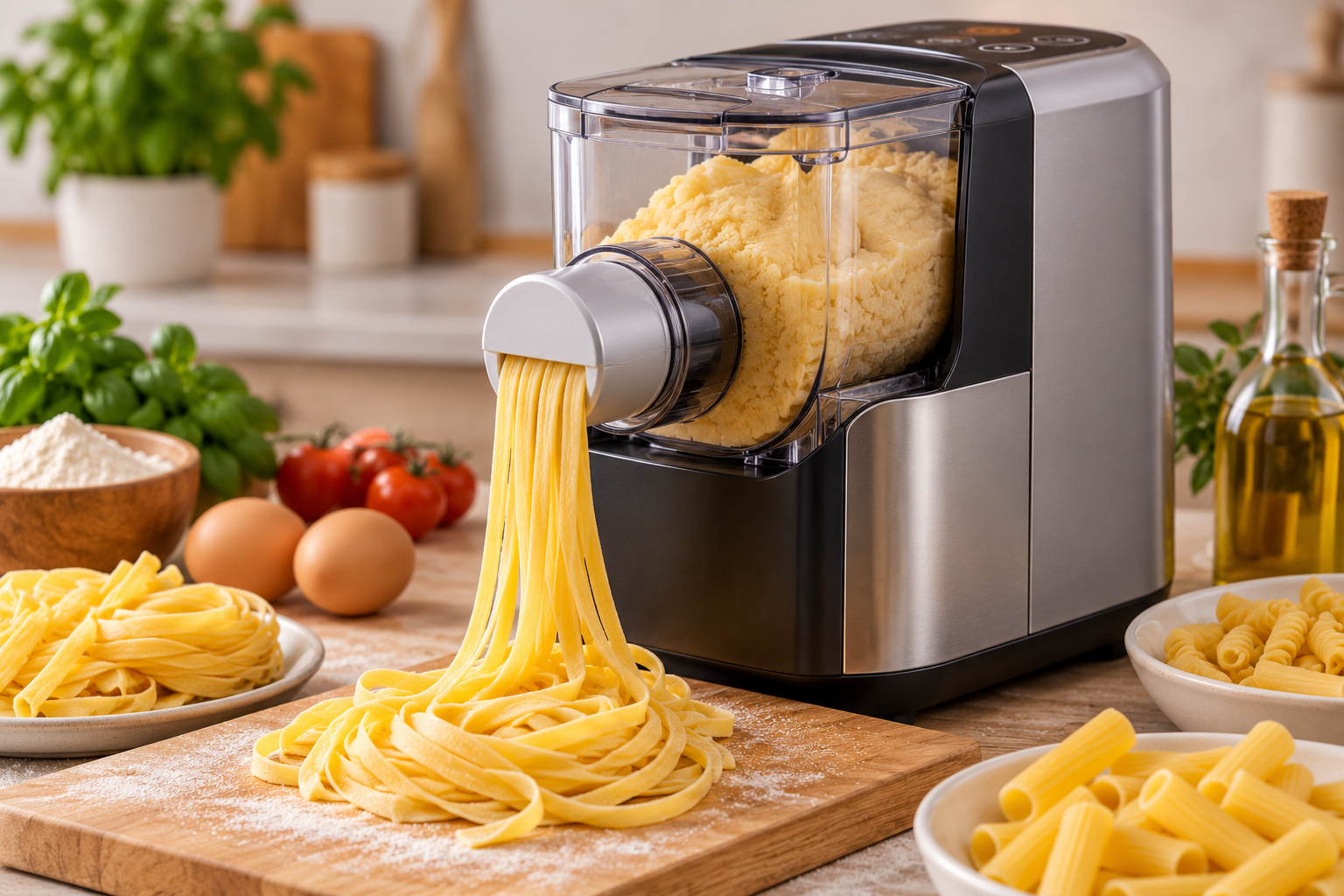
Choosing the best electric pasta maker for beginners can make homemade pasta much easier and more convenient. Unlike manual pasta machines, many electric models can automate part of the mixing, kneading, or shaping process.
In this guide, we’ll compare the main types of electric pasta makers, explain the features that matter most, and help you choose a practical machine for making fresh pasta at home.
Electric Pasta Maker Types: Quick Comparison
| Type | Best For | Ease of Use | Main Advantage |
| Automatic Pasta Maker | Beginners | Very Easy | Automates multiple steps |
| Electric Pasta Roller | Traditional pasta sheets | Easy | Motorized rolling |
| Pasta Extruder | Different pasta shapes | Easy | Creates shaped pasta |
What Is the Best Electric Pasta Maker for Beginners?
For many beginners, an automatic pasta maker is one of the easiest options because it can handle several parts of the pasta-making process with less manual work.
Some machines mix and knead the dough before extruding it into different pasta shapes, while other electric models focus mainly on rolling or shaping prepared dough.
The best choice depends on how much automation you want, the types of pasta you plan to make, your available kitchen space, and your budget.
What to Look for When Choosing an Electric Pasta Maker
1. Level of Automation
Electric pasta makers vary in how much of the process they automate. Some machines can mix, knead, and extrude the dough, while others mainly help with rolling or shaping.
For beginners who want a simpler process, a more automated machine may be easier to use. If you prefer more control over the dough, a motorized roller or less automated model may be a better fit.
2. Pasta Shapes and Attachments
Consider the types of pasta you want to make before choosing a machine. Some electric pasta makers include shaping discs or attachments for several pasta styles, while others are designed mainly for sheets or a smaller range of shapes.
A machine with useful attachments can provide more flexibility, but additional accessories only add value if you plan to use them regularly.
3. Capacity
Capacity affects how much pasta you can prepare in one batch. A smaller machine may be enough for one or two people, while a larger-capacity model can be more convenient for families or larger meals.
Check the manufacturer’s recommended batch size rather than assuming that a physically larger machine always produces more pasta at once.
4. Cleaning and Maintenance
Fresh pasta dough can leave flour and small pieces of dough inside the machine, so cleaning should be an important part of your decision.
Look for removable parts and a design that provides easy access to areas where dough may collect. Always follow the manufacturer’s cleaning instructions, since some components may need to be cleaned by hand rather than placed in a dishwasher.
5. Size and Storage
Electric pasta makers are generally larger than simple manual pasta tools, so consider where the machine will sit while you use it and where you will store it afterward.
Check the machine’s dimensions before buying, especially if you have limited counter or cabinet space. Also consider the storage required for shaping discs, attachments, and other accessories.
Recommended Electric Pasta Makers for Beginners
Affiliate Disclosure: This article contains affiliate links. If you make a purchase through one of these links, we may earn a commission at no additional cost to you. As an Amazon Associate I earn from qualifying purchases.
Philips 7000 Series Pasta Maker
The Philips 7000 Series Pasta Maker is a strong option for beginners who want a highly automated approach to making fresh pasta at home. The machine is designed to handle mixing, kneading, and extruding, reducing much of the manual work involved in traditional pasta making.
It includes multiple shaping discs for preparing different pasta styles, making it a versatile choice for people who want to experiment with more than one type of fresh pasta.
Best for: Beginners who want a more automated, all-in-one pasta-making experience.
Which Electric Pasta Maker Should You Choose?
For beginners who want to reduce the amount of manual work involved in making fresh pasta, a fully automatic pasta maker can be a convenient choice. These machines can handle several stages of the process, allowing you to focus more on ingredients and pasta shapes.
If you prefer greater control over the dough or mainly want to make traditional pasta sheets, a motorized roller may be a better fit.
Consider how often you plan to make pasta, the types of pasta you want to prepare, available kitchen space, cleaning requirements, and your budget before choosing a machine.
Frequently Asked Questions
Are electric pasta makers good for beginners?
Yes. Electric pasta makers can be a good option for beginners because they can reduce some of the manual work involved in preparing fresh pasta.
Fully automatic models may handle mixing, kneading, and shaping, while other electric machines automate only part of the process. Beginners should still follow the manufacturer’s instructions carefully, especially for ingredient quantities, assembly, and cleaning.
Is an electric pasta maker worth it?
An electric pasta maker can be worth considering if you make fresh pasta regularly and want to reduce the amount of manual mixing, kneading, rolling, or shaping involved.
However, these machines generally cost more and require more storage space than simple manual pasta tools. If you only make pasta occasionally, a manual option may be enough. The better choice depends on how often you plan to use the machine and how much you value convenience and automation.
Final Thoughts
Choosing the best electric pasta maker for beginners comes down to how much automation you want, the types of pasta you plan to make, and how often you expect to use the machine.
A fully automatic model can simplify several steps of the process, while a motorized roller may be better for cooks who want more control over their dough. Also consider capacity, attachments, cleaning, storage space, and budget before making your decision.
For beginners who plan to make fresh pasta regularly, choosing a machine that is simple to operate and easy to maintain can be more valuable than choosing the model with the longest list of features.
If you also enjoy making filled pasta, read our best ravioli maker for beginners guide to compare simple tools for shaping homemade ravioli.
Already have a machine or want to understand the process before buying? Read our guide on how to use an electric pasta maker for step-by-step instructions on preparing and making fresh pasta.
4 thoughts on “Best Electric Pasta Maker for Beginners: A Practical Buying Guide”