
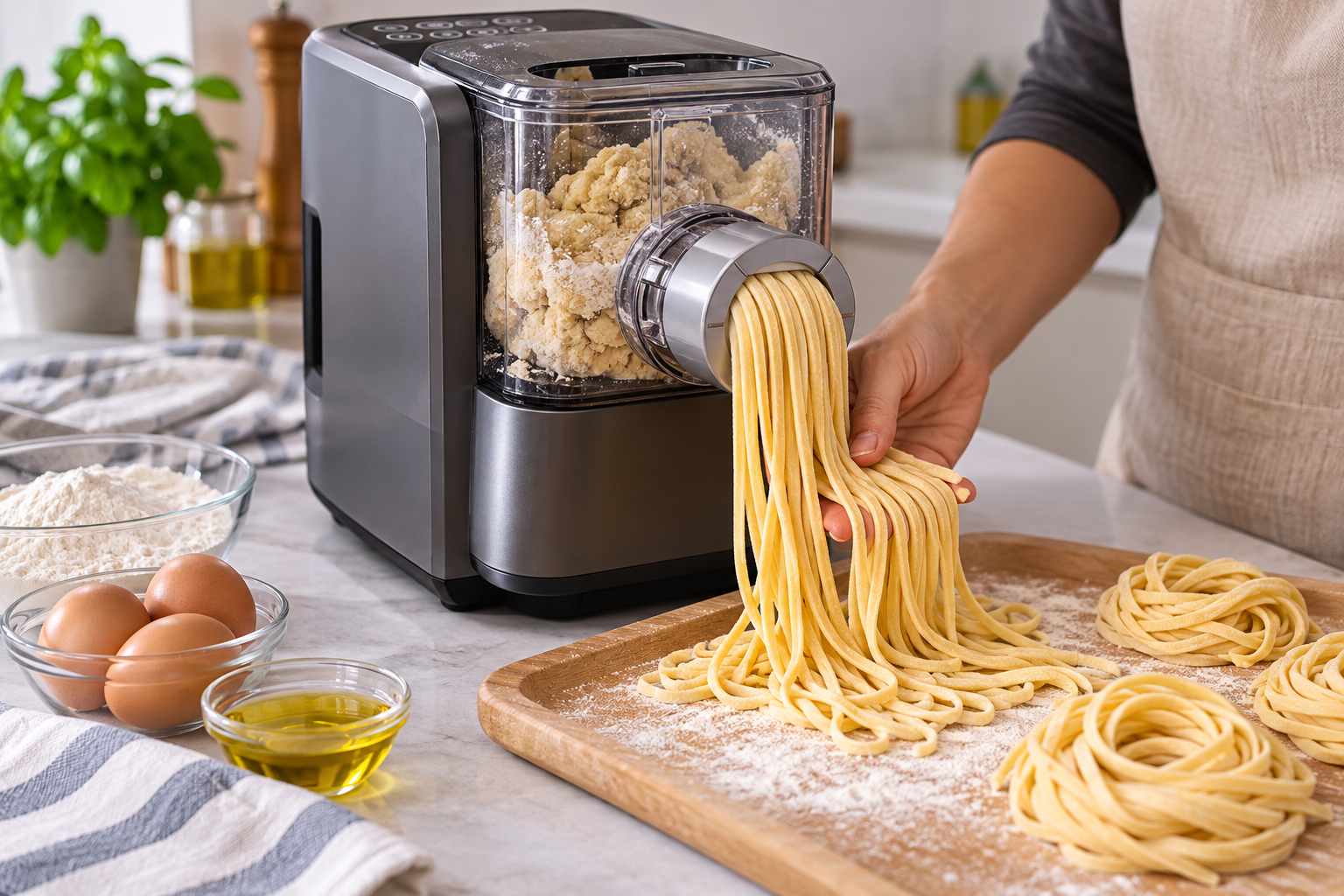
Learning how to use an electric pasta maker can make preparing fresh pasta at home much easier. Depending on the machine, several steps such as mixing, kneading, and shaping may be handled automatically.
In this beginner-friendly guide, we’ll walk through how to use an electric pasta maker step by step, from preparing the ingredients to shaping the pasta and cleaning the machine after use.
What You Need to Use an Electric Pasta Maker
Before you start, prepare the machine and the ingredients recommended for your recipe. You will typically need:
- An electric pasta maker
- Flour suitable for your pasta recipe
- Water or other liquid specified by the recipe
- Eggs, if your recipe requires them
- A measuring cup or kitchen scale
- A clean tray or surface for the finished pasta
Always check the instructions included with your specific pasta maker before adding ingredients, since quantities, assembly, and operating steps can vary between machines.
How to Use an Electric Pasta Maker Step by Step
Step 1: Assemble the Pasta Maker
Make sure the pasta maker is unplugged before assembling any removable parts. Install the mixing chamber, shaping disc, or other components required for the type of pasta you want to make.
Check that each part is properly secured according to the manufacturer’s instructions before connecting the machine to power.
Step 2: Measure the Ingredients
Measure the flour and liquid carefully according to your pasta maker’s instructions or the recipe you are following. The correct flour-to-liquid ratio is important because dough that is too wet or too dry may not mix or extrude properly.
For the first few batches, follow the manufacturer’s recommended quantities closely rather than estimating the ingredients.
Step 3: Add the Ingredients
Add the measured ingredients according to the instructions for your machine. Some electric pasta makers require the flour to be added first and the liquid to be poured in gradually after the mixing cycle begins.
Do not assume that every machine uses the same order. Follow the manufacturer’s instructions for your specific model to avoid problems with mixing or dough consistency.
Step 4: Start the Mixing and Kneading Cycle
Select the appropriate program for your pasta maker and start the machine. Depending on the model, it may automatically mix and knead the ingredients before moving to the shaping or extrusion stage.
Watch the dough during the first few minutes without opening or interfering with the machine unless the manufacturer’s instructions tell you to make an adjustment.
Step 5: Extrude and Cut the Pasta
As the pasta begins to come out of the shaping disc, support it gently so it does not pile up directly in front of the machine.
Cut the pasta to your preferred length using the cutting tool recommended for your machine. Place the finished pasta on a clean tray or lightly floured surface while the remaining dough is being extruded.
Step 6: Clean the Pasta Maker
When you finish making pasta, turn off and unplug the machine before removing any parts. Allow remaining dough to dry slightly if recommended by the manufacturer, since dried dough can sometimes be easier to remove from shaping discs and small openings.
Clean each removable component according to the manufacturer’s instructions. Do not immerse the motorized base in water, and make sure all parts are completely dry before reassembling or storing the machine.
Tips for Better Fresh Pasta
- Measure flour and liquid carefully rather than estimating.
- Follow the recipe and operating instructions provided for your specific machine.
- Choose the correct shaping disc before starting the pasta-making cycle.
- Avoid adding extra liquid too quickly if the dough initially looks dry.
- Support the pasta as it is extruded so it does not stick together in a pile.
- Clean shaping discs and removable parts soon after use or according to the manufacturer’s recommended cleaning method.
Common Electric Pasta Maker Mistakes
Using the wrong ingredient ratio: Too much or too little liquid can affect how the dough mixes and extrudes.
Adding ingredients in the wrong order: Some machines require a specific sequence for flour and liquids, so follow the instructions for your model.
Using the wrong shaping disc: Make sure the correct disc is installed securely before starting the machine.
Letting fresh pasta pile up: Pasta strands may stick together if they collect in one place as they leave the machine.
Cleaning the machine incorrectly: Electric pasta makers contain motorized components that should not be submerged in water. Follow the manufacturer’s cleaning instructions for each part.
Frequently Asked Questions
Why is my pasta dough too dry or crumbly?
Pasta dough may look dry or crumbly during mixing if the flour-to-liquid ratio is not correct for your machine or recipe. However, some electric pasta makers are designed to work with dough that looks drier than traditional hand-kneaded pasta dough.
Before adding extra liquid, check the manufacturer’s instructions. Adding too much liquid can make the dough sticky and may affect how well it extrudes.
Why is the pasta sticking together after extrusion?
Fresh pasta may stick together if the strands collect in one place after leaving the machine or if the dough contains too much moisture.
Support and separate the pasta as it is extruded, then place it on a clean surface according to your recipe. If sticking continues, check the ingredient measurements and your pasta maker’s instructions before changing the dough mixture.
Final Thoughts
Learning how to use an electric pasta maker becomes much easier once you understand the basic process. Assemble the machine correctly, measure the ingredients carefully, follow the recommended mixing cycle, and manage the pasta as it is extruded.
Because electric pasta makers vary in design, always use the instructions for your specific model as your main reference for ingredient quantities, programs, assembly, and cleaning.
With a little practice, an electric pasta maker can provide a convenient and repeatable way to prepare fresh pasta at home.
If you are still choosing a machine, read our best electric pasta maker for beginners guide to compare automation, capacity, attachments, cleaning, and other important features before buying.
Not sure whether an electric machine is the right choice for you? Read our electric pasta maker vs manual pasta maker comparison to see how the two options differ in convenience, control, cleaning, storage, and cost.
1 thought on “How to Use an Electric Pasta Maker: Step-by-Step Guide for Beginners”