
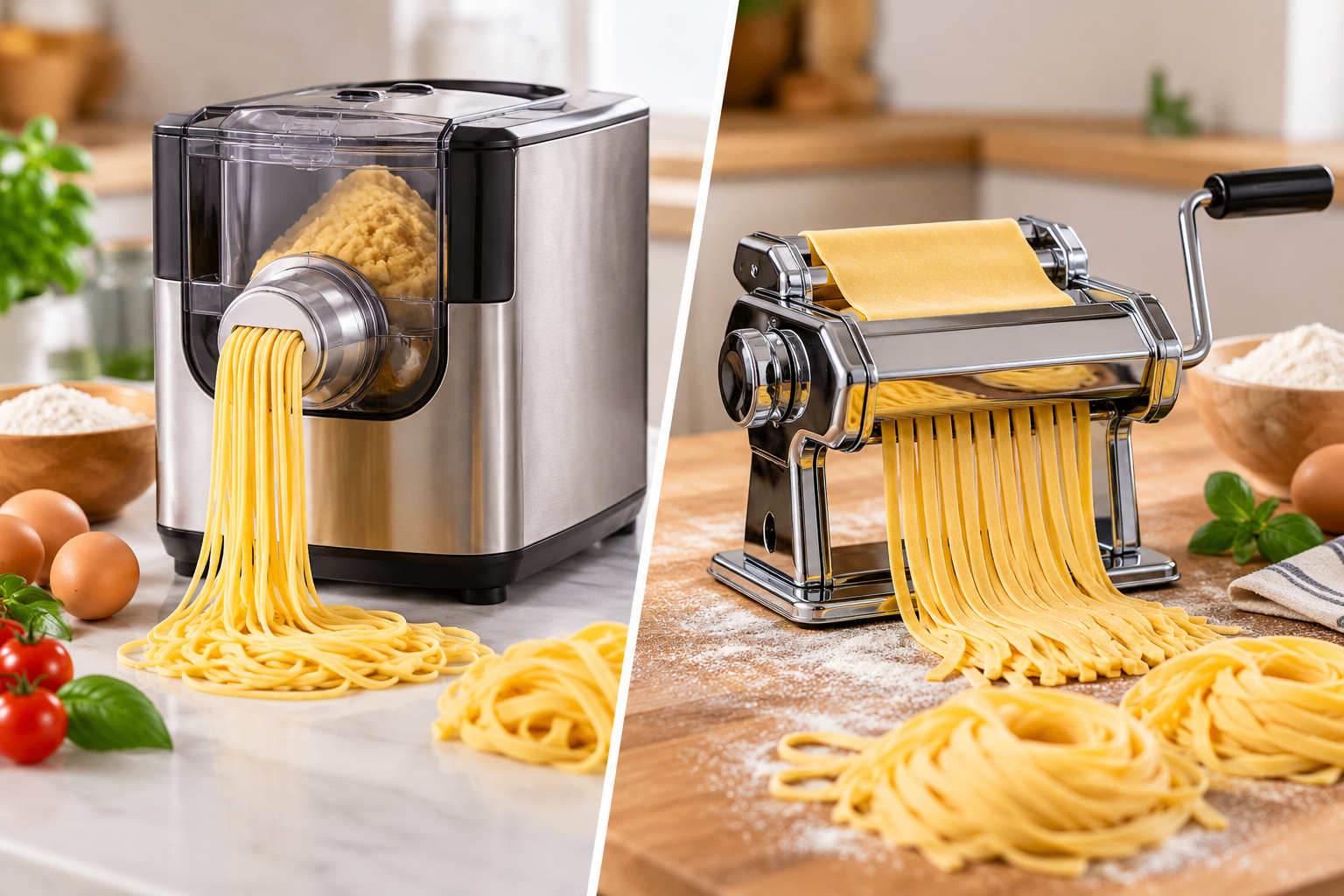
Choosing between an electric pasta maker and a manual pasta maker depends on how much convenience, control, and hands-on preparation you want when making fresh pasta at home.
In this electric pasta maker vs manual pasta maker comparison, we’ll look at ease of use, speed, versatility, cleaning, storage, and cost to help you decide which type is better for your kitchen.
Electric vs Manual Pasta Maker: Quick Comparison
| Feature | Electric Pasta Maker | Manual Pasta Maker |
| Ease of Use | More automated | More hands-on |
| Effort | Lower | Higher |
| Control | Depends on the machine | More direct control |
| Cleaning | More parts to clean | Usually simpler |
| Storage | Generally larger | Usually more compact |
| Cost | Generally higher | Generally lower |
How Does an Electric Pasta Maker Work?
An electric pasta maker uses a motor to automate part of the pasta-making process. Fully automatic models may mix, knead, and extrude the dough, while other electric machines mainly assist with rolling or shaping.
This can reduce the amount of manual work required and provide a more repeatable process. However, electric machines usually contain more components and may require more setup, cleaning, and storage space than a basic manual pasta maker.
How Does a Manual Pasta Maker Work?
A manual pasta maker usually relies on a hand crank to roll prepared dough into thinner sheets. Many models also include cutters for turning the sheets into pasta such as fettuccine or spaghetti.
You prepare and knead the dough separately, then pass it through the rollers several times while adjusting the thickness. This requires more hands-on work, but it also gives you direct control over how the dough is rolled and shaped.
Electric Pasta Maker vs Manual Pasta Maker: Key Differences
1. Ease of Use
An electric pasta maker can be easier for beginners who want to reduce the amount of manual mixing, kneading, rolling, or shaping involved. Fully automatic models can handle several steps with limited hands-on work.
A manual pasta maker requires more involvement because you usually prepare the dough separately and feed it through the rollers yourself. However, some beginners may prefer this hands-on process because it gives them more direct control over the dough.
2. Speed and Effort
Electric pasta makers can reduce physical effort because the motor handles part of the process. Fully automatic models may also combine several stages in one machine, which can make preparation more convenient.
Manual pasta makers require more hands-on work, including preparing the dough and turning the crank while feeding the dough through the rollers. The total time depends on your experience, recipe, and the type of pasta you are making.
3. Control and Versatility
Manual pasta makers give you direct control over the dough as you roll it through different thickness settings. This can be useful for pasta sheets, lasagna, and recipes where you want to adjust the thickness gradually.
Electric pasta makers vary more by design. Some focus on automatically extruding different pasta shapes, while others use motorized rollers. Their versatility depends largely on the shaping discs, cutters, and attachments available for the specific machine.
4. Cleaning and Maintenance
Manual pasta makers often have fewer removable components, but flour and dough can still collect around the rollers and cutters. Many models should be cleaned with a brush or dry cloth rather than washed under running water, so always check the manufacturer’s instructions.
Electric pasta makers may have more removable parts, including mixing chambers, shaping discs, and other accessories. This can require more cleaning after each batch, while the motorized base must be kept away from water.
5. Cost and Storage
Manual pasta makers are generally less expensive and more compact than fully automatic electric machines. This can make them a practical option if you have limited kitchen space or only make fresh pasta occasionally.
Electric pasta makers usually cost more and may require additional counter or cabinet space. The higher price may be worthwhile if you make pasta regularly and value automation and convenience.
Which Pasta Maker Is Better for Beginners?
For beginners who want the simplest process with less hands-on work, a fully automatic electric pasta maker may be the better choice. It can handle several stages of pasta preparation and reduce the amount of manual effort required.
A manual pasta maker may be better for beginners who want to learn the traditional process, have more control over dough thickness, or spend less on their first machine.
Neither option is automatically better for everyone. The right choice depends on your budget, available kitchen space, how often you plan to make pasta, and whether you prefer convenience or a more hands-on experience.
Frequently Asked Questions
Is an electric pasta maker easier than a manual one?
For many beginners, a fully automatic electric pasta maker can be easier because it reduces the amount of manual mixing, kneading, rolling, or shaping required.
However, ease of use depends on the specific machine. Electric models may involve more assembly and cleaning, while manual pasta makers require more hands-on work but often have a simpler design.
Which pasta maker is better if you only make pasta occasionally?
If you only make fresh pasta occasionally, a manual pasta maker may be the more practical choice because it is generally less expensive and easier to store.
However, an electric pasta maker may still make sense if convenience is your main priority and you prefer to reduce the amount of hands-on preparation. Consider how often you expect to use the machine before paying more for additional automation.
Final Thoughts
When comparing an electric pasta maker vs manual pasta maker, the main difference comes down to convenience versus hands-on control.
An electric model can reduce manual effort and may automate several stages of pasta preparation, while a manual machine offers a simpler, often more affordable way to roll and cut pasta yourself.
For beginners, choose based on how often you plan to make pasta, your available storage space, your budget, and whether you prefer automation or a more traditional pasta-making experience.
If an electric model sounds like the better choice for your kitchen, read our best electric pasta maker for beginners guide to compare important features before choosing a machine.
Still deciding which type of machine is right for you? See our electric pasta maker vs manual pasta maker comparison to understand the differences in convenience, control, cleaning, storage, and cost.
1 thought on “Electric Pasta Maker vs Manual Pasta Maker: Which Is Better?”