
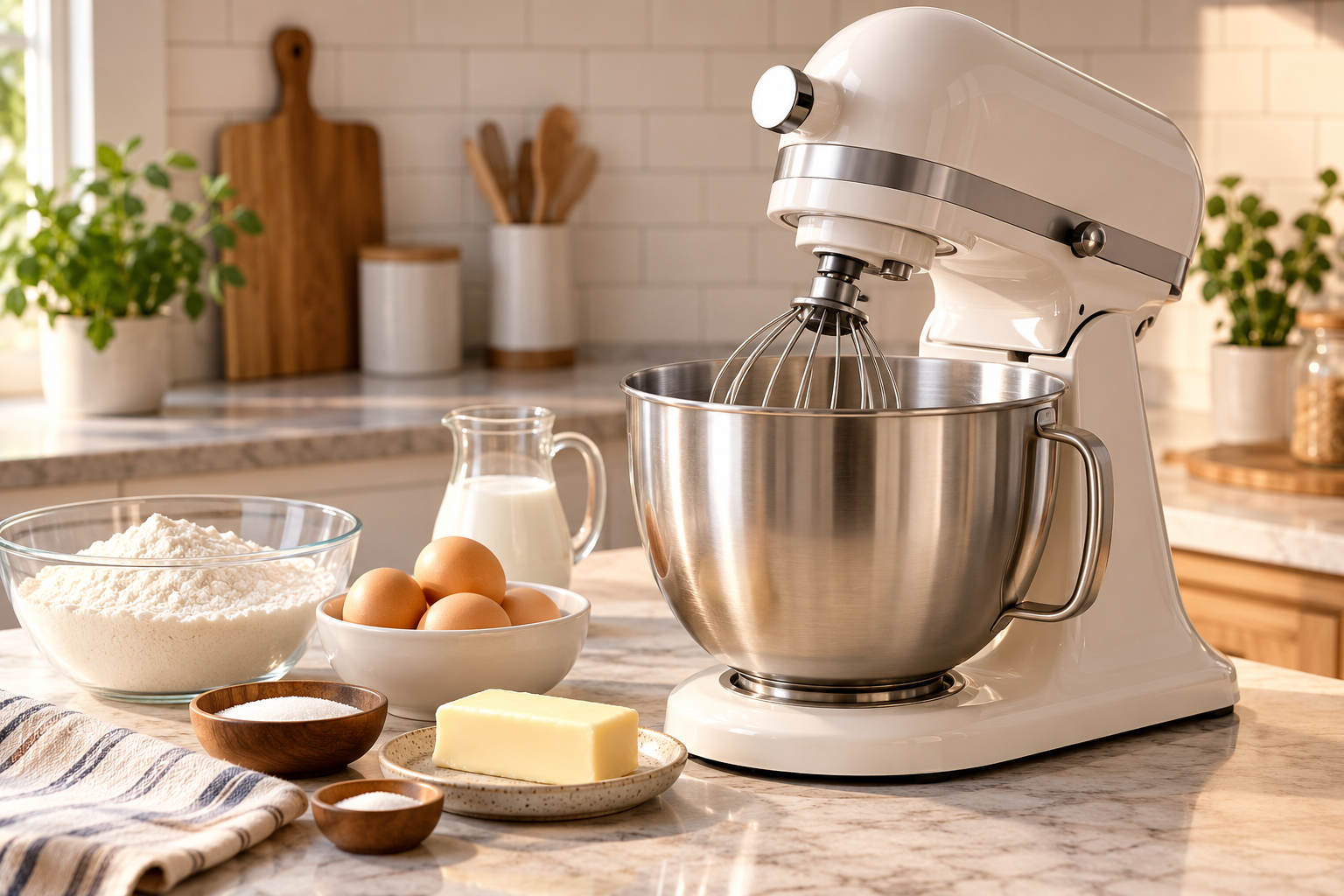
A stand mixer can make baking and food preparation easier by handling tasks such as mixing batter, kneading dough, and whipping ingredients with less manual effort.
For beginners, however, choosing the right stand mixer can be confusing. Bowl capacity, motor performance, attachments, machine size, and price can vary considerably between models.
In this guide, we’ll explain what to look for when choosing the best stand mixer for beginners and help you decide which features are worth paying for.
Types of Stand Mixers: Quick Comparison
| Type | Best For | Main Advantage |
| Tilt-Head Stand Mixer | Most beginners and home bakers | Easy access to the bowl |
| Bowl-Lift Stand Mixer | Larger or heavier batches | More stable for demanding mixing |
| Compact Stand Mixer | Small kitchens and lighter tasks | Takes up less counter space |
What Is the Best Stand Mixer for Beginners?
For most beginners, a tilt-head stand mixer is a practical starting point because it provides easy access to the mixing bowl and is suitable for many everyday baking tasks.
A medium-capacity model can handle common recipes such as cakes, cookies, bread dough, and whipped ingredients without taking up as much space as many larger bowl-lift machines.
The best choice depends on what you plan to make, how often you expect to use the mixer, your available counter space, and your budget.
What to Look for When Buying a Stand Mixer
1. Bowl Capacity
Bowl capacity affects how much you can mix in a single batch. A medium-sized bowl is often practical for beginners because it can handle many everyday recipes without making the mixer unnecessarily large.
If you regularly prepare large batches of dough or bake for several people, a larger bowl may be more convenient. However, bigger mixers generally require more counter and storage space.
Choose a capacity based on the recipes you expect to make most often rather than simply buying the largest option available.
2. Mixing Performance
A good stand mixer should maintain consistent mixing performance across common tasks such as beating batter, whipping cream, and kneading dough.
Motor wattage alone does not always indicate how well a mixer will perform. The mixer’s design, gearing, speed control, and ability to handle heavier mixtures also affect real-world performance.
For beginners, look for a model that can comfortably handle the recipes you plan to make most often without paying extra for power or capacity you may rarely use.
3. Attachments and Accessories
Most stand mixers include basic attachments such as a flat beater, dough hook, and wire whisk. These accessories cover many common tasks, including mixing batter, kneading dough, and whipping ingredients.
Some mixers also support optional attachments for tasks such as pasta making, grinding meat, slicing, or shredding. These can make the mixer more versatile, but they may increase the overall cost.
For beginners, focus first on the attachments you are likely to use regularly rather than choosing a mixer simply because it supports many accessories.
4. Size, Weight, and Storage
Stand mixers can be relatively large and heavy, so consider where the machine will stay before choosing a model.
If you plan to keep the mixer on your countertop, check its dimensions and make sure there is enough clearance above it, especially for a tilt-head design. If you need to store the mixer after each use, weight becomes more important because heavier models can be difficult to move regularly.
Measure your available space before buying to avoid choosing a mixer that is inconvenient for your kitchen.
5. Speed Settings
Multiple speed settings give you more control over different mixing tasks. Lower speeds are useful for combining dry ingredients and starting dough, while higher speeds are better for tasks such as whipping cream or egg whites.
For beginners, a mixer with a useful range of clearly adjustable speeds is generally more important than simply choosing the model with the highest number of settings.
Look for controls that are easy to understand and adjust while the mixer is in use.
6. Cleaning and Maintenance
Easy cleaning can make a stand mixer more convenient to use regularly. Removable bowls and attachments are generally easier to wash, and some parts may be dishwasher-safe depending on the manufacturer’s instructions.
The mixer body should usually be wiped clean after use, especially around areas where flour or batter can collect.
Before buying, check the cleaning instructions for the bowl and included attachments so you know how much maintenance the mixer will require.
Recommended Stand Mixers for Beginners
Affiliate Disclosure: This article contains affiliate links. If you make a purchase through one of these links, we may earn a commission at no additional cost to you. As an Amazon Associate I earn from qualifying purchases.
1. Aucma 6.5-QT Stand Mixer
The Aucma 6.5-QT Stand Mixer is a practical option for beginners who want a larger mixing bowl and several speed settings without immediately moving into the premium price range.
Its tilt-head design provides convenient access to the bowl and attachments, while the included dough hook, mixing beater, and whisk cover common tasks such as preparing dough, cake batter, and whipped ingredients.
The larger bowl may be particularly useful for people who expect to prepare bigger batches, but consider the mixer’s overall size and available counter space before buying.
Check the Aucma 6.5-QT Stand Mixer on Amazon
2. KitchenAid Artisan Series 5-Quart Tilt-Head Stand Mixer
The KitchenAid Artisan Series 5-Quart Tilt-Head Stand Mixer is a premium option for beginners who expect to bake regularly and want a versatile mixer that can remain useful as their skills develop.
Its 5-quart bowl provides practical capacity for many everyday baking recipes, while the tilt-head design makes it easier to access the bowl and change attachments. The mixer can handle common tasks such as mixing batter, whipping ingredients, and kneading dough.
One of its main advantages is the broader KitchenAid attachment ecosystem, which can expand the mixer’s capabilities over time. Its higher price makes it better suited to beginners who expect frequent use rather than those who only bake occasionally.
Check the KitchenAid Artisan Series 5-Quart Stand Mixer on Amazon
Which Stand Mixer Should You Choose?
The right stand mixer depends on your budget, available kitchen space, and how often you expect to use the machine.
The Aucma 6.5-QT Stand Mixer may be a practical choice if you want a larger bowl and useful everyday mixing features at a more accessible price.
The KitchenAid Artisan Series 5-Quart Tilt-Head Stand Mixer is better suited to beginners who expect to bake regularly, want access to a broader range of optional attachments, and are comfortable paying more for a premium option.
Before choosing, consider the recipes you make most often and whether bowl capacity, storage space, attachments, or long-term versatility matters most to you.
Frequently Asked Questions
What size stand mixer is best for beginners?
A stand mixer with a bowl around 4.5 to 5.5 quarts is often a practical size for beginners because it can handle many everyday baking recipes without taking up excessive counter space.
A larger bowl may be useful if you regularly prepare bigger batches or heavier doughs, but it can also make the mixer larger and heavier. Choose the capacity that best matches the recipes you expect to make most often.
Is a stand mixer worth buying for a beginner?
A stand mixer can be worth buying for a beginner who bakes regularly or wants to reduce the manual effort involved in mixing, whipping, and kneading.
However, occasional bakers may not need a large or expensive model. Consider how often you expect to use the mixer, the types of recipes you prepare, and whether you have enough counter or storage space before investing in one.
Final Thoughts
The best stand mixer for beginners is not necessarily the largest or most expensive model. A good choice should match the recipes you make, your available kitchen space, and how often you plan to use the mixer.
For many beginners, a tilt-head mixer with practical bowl capacity, useful speed settings, and the essential attachments provides a good balance of convenience and versatility.
Compare the features that matter most to you before buying, and choose a mixer that fits both your current needs and the type of cooking or baking you expect to do in the future.
If you are also comparing other convenient countertop appliances, read our best electric pasta maker for beginners guide to see what features matter when choosing an automated pasta machine.
4 thoughts on “Best Stand Mixer for Beginners: A Practical Buying Guide”