
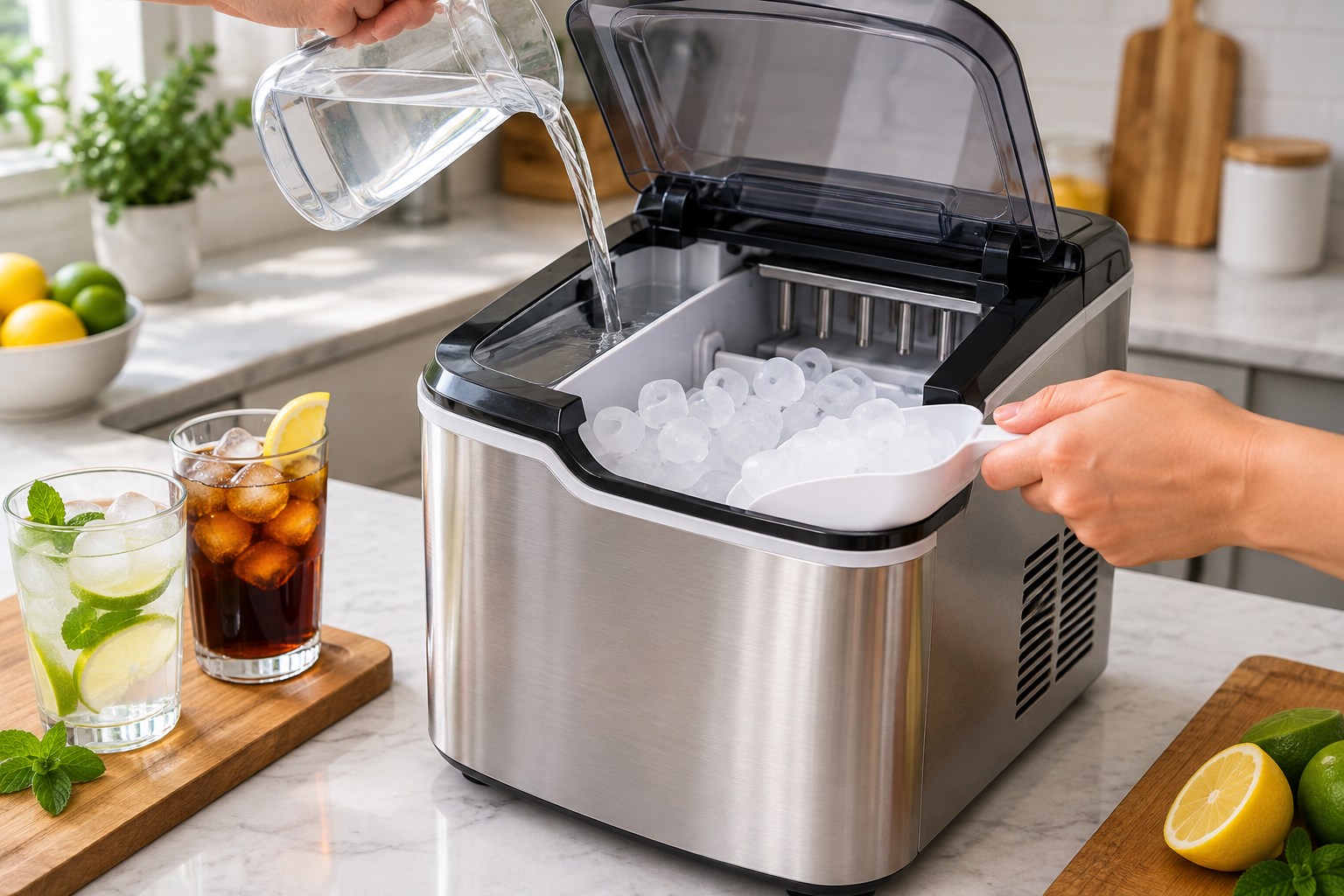
Using a countertop ice maker is usually simple, but following the right steps can help you make ice more efficiently and keep the machine in good condition.
From choosing the right location and adding water to removing finished ice and cleaning the machine, a few basic habits can make a noticeable difference.
In this beginner-friendly guide, we’ll explain how to use a countertop ice maker step by step and cover common mistakes to avoid.
What You Need Before Using a Countertop Ice Maker
Before using your countertop ice maker, make sure you have a stable counter or surface with enough ventilation around the machine, clean water, and a clean ice basket.
Check the manufacturer’s instructions before the first use. Some machines may need to be cleaned before making the first batch of ice, and recommended setup steps can vary between models.
If the machine was recently transported or tilted, follow the manufacturer’s instructions about how long it should remain upright before being turned on.
How to Use a Countertop Ice Maker Step by Step
Step 1: Place the Ice Maker on a Stable Surface
Place the ice maker on a flat, stable surface near a suitable electrical outlet. Leave enough space around the machine for ventilation according to the manufacturer’s instructions.
Avoid placing it next to a stove, oven, or other strong heat source, since higher surrounding temperatures can affect ice production.
Step 2: Fill the Water Reservoir
Open the machine and fill the water reservoir with clean water, staying below the maximum fill line indicated by the manufacturer.
Do not overfill the reservoir. If your model has specific recommendations for water type or temperature, follow the instructions in the user manual.
Step 3: Turn On the Ice Maker
Plug in the ice maker and press the power button. Depending on the model, you may also be able to select an ice size, ice-making mode, or other available settings.
After starting the machine, allow it to complete its first ice-making cycle. Production time varies by model and operating conditions, so check the manufacturer’s instructions for typical cycle times.
Step 4: Let the Machine Make Ice
Step 4: Let the Machine Make Ice
Once the ice-making cycle begins, the machine will cool the water and form ice according to its design. You usually do not need to interfere with the process while the machine is running.
The first batch may differ slightly in size or consistency from later batches. Allow the machine to continue operating until you have the amount of ice you need.
Step 5: Remove and Store the Ice
Remove finished ice from the basket as needed using the scoop provided with the machine or another clean utensil.
Most countertop ice makers are designed to produce ice rather than keep it frozen for long periods. If you want to save the ice for later, transfer it to a freezer-safe container or bag and store it in your freezer.
Step 6: Clean the Ice Maker After Use
After use, empty any remaining ice and follow the manufacturer’s instructions for draining and cleaning the machine.
Wipe accessible surfaces and clean the water reservoir, ice basket, and removable components as recommended. Some models include a self-cleaning cycle, but periodic manual cleaning may still be required.
Allow the interior to dry before storing the machine or leaving it unused for an extended period.
Tips for Better Ice Production
Use clean water and keep the machine in a well-ventilated location away from strong heat sources.
Avoid overfilling the water reservoir, and remove ice from the basket regularly if you are making several batches.
Keep the machine clean and follow the manufacturer’s recommended maintenance schedule. If ice production becomes slower than usual, check the water level, ventilation, room temperature, and whether the machine needs cleaning.
Common Countertop Ice Maker Mistakes
One common mistake is placing the ice maker too close to a wall or heat source, which can reduce ventilation and affect performance.
Overfilling the water reservoir, allowing mineral buildup to develop, and leaving old water in the machine for extended periods can also cause problems.
Another mistake is expecting the ice basket to work like a freezer. Most countertop ice makers do not keep finished ice permanently frozen, so transfer extra ice to your freezer if you want to store it for later.
Frequently Asked Questions
Can you leave a countertop ice maker running all day?
Whether you can leave a countertop ice maker running for extended periods depends on the specific model and the manufacturer’s instructions.
Many machines are designed to pause when the ice basket is full or when more water is needed, but features vary between models. Follow the operating and safety instructions for your machine rather than assuming it should run continuously.
Why is my countertop ice maker not making ice?
If your countertop ice maker is not making ice, first check that it has enough water, is powered on correctly, and has adequate ventilation.
High room or water temperatures, a full ice basket, mineral buildup, or a machine that needs cleaning can also affect ice production. If basic checks do not solve the problem, consult the manufacturer’s troubleshooting instructions for your specific model.
Final Thoughts
Learning how to use a countertop ice maker is straightforward once you understand the basic setup, water filling, ice-making, storage, and cleaning steps.
For better results, keep the machine well ventilated, use clean water, remove finished ice when needed, and follow the manufacturer’s cleaning and maintenance instructions.
With proper use and regular care, a countertop ice maker can provide a convenient supply of fresh ice for everyday drinks and entertaining.
Still choosing a machine? Read our best countertop ice maker for beginners guide to compare ice types, production capacity, size, cleaning, and other important features before buying.
1 thought on “How to Use a Countertop Ice Maker: Step-by-Step Guide for Beginners”