
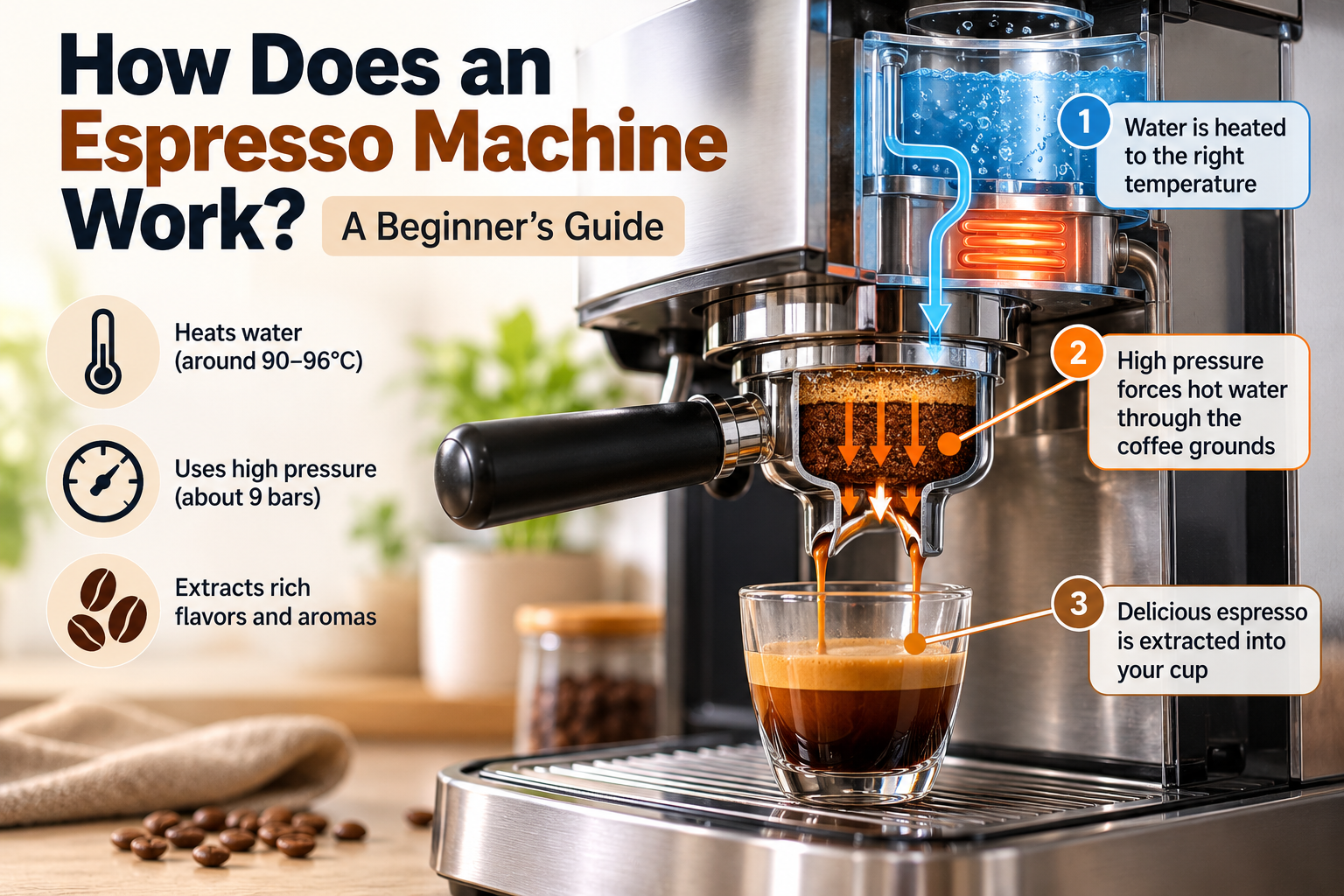
How does an espresso machine work? An espresso machine heats water and pushes it through finely ground coffee under pressure to produce a concentrated shot of espresso. Understanding how the pump, boiler or heating system, portafilter, and brewing process work together can help beginners make better espresso at home.
An espresso machine forces heated water through a compact bed of finely ground coffee to produce a concentrated drink. The process involves several parts working together: a water supply, heater, pump, brewing group and portafilter or brewing chamber. Understanding these parts makes shopping and troubleshooting much easier.
How Does an Espresso Machine Work During Extraction?
- Prepare the coffee: Grind beans finely, measure a dose and distribute grounds evenly in the basket.
- Tamp: Compress the coffee bed evenly using a suitable tamper.
- Heat the water: The machine brings water to its designed brewing range.
- Extract: Water passes through the coffee under pressure, dissolving soluble compounds and carrying oils into the cup.
- Evaluate: Adjust grind, dose or yield if the shot tastes unbalanced.
Key espresso machine components
Pump and pressure
A pump moves water through the system. Many machines advertise a maximum pump rating, but that figure is not the same as pressure during extraction. Stable operation and the coffee puck’s resistance matter more than marketing numbers.
Heating system
Thermoblocks, thermocoils and boilers heat water in different ways. Warm-up speed is convenient, but a fast-starting heater does not mean the full drink is ready immediately.
Portafilter and basket
The portafilter holds a basket containing the coffee. Basket diameter and whether it is pressurized affect workflow and accessory compatibility. Check your machine’s manual before buying extra baskets or tampers.
Steam wand
Steam heats and textures milk for lattes and cappuccinos. Some machines offer automatic milk texturing, while others require manual technique.
Manual, semi-automatic and automatic machines
Manual lever machines give the user more direct control. Semi-automatic machines use a pump while the user handles coffee preparation and often stops the shot. More automated models may handle shot volume or milk texture. Labels vary between brands, so compare actual functions.
Why your coffee grinder matters
Espresso requires a fine grind with enough adjustment control to respond to changes in beans and extraction. An unsuitable grinder can make even a capable espresso machine frustrating. Start with our guide to burr grinders for home use.
Common beginner problems
Espresso flows too quickly
Check whether the grind is too coarse, the dose is too small, or distribution is uneven. Change one variable at a time.
Espresso barely flows
The grind may be too fine or the basket overloaded. Follow the machine’s recommended dose and test gradual adjustments.
Milk foam has large bubbles
For manual steaming, review wand position and milk temperature guidance in the machine manual; practice with fresh cold milk.
Safety and maintenance
Steam wands, water and metal components can become very hot. Follow manufacturer instructions for purging, cleaning, backflushing where supported, and descaling. Never open pressurized parts while operating.
Espresso grinder option on Amazon
If you need a separate grinder for espresso, consider researching the Baratza Encore ESP on Amazon. A grinder is a separate purchase from the espresso machines discussed here.
Frequently asked questions
Do espresso machines need a separate grinder?
Some machines include grinders, but the three models in our comparison do not.
Is espresso stronger than drip coffee?
Espresso is more concentrated per unit volume, but total caffeine depends on serving size, beans and recipe.
Can beginners make good espresso?
Yes, with suitable equipment, fresh beans and consistent practice. See our first espresso machine buying checklist and three-machine comparison.
2 thoughts on “How Does an Espresso Machine Work? A Beginner’s Guide”