
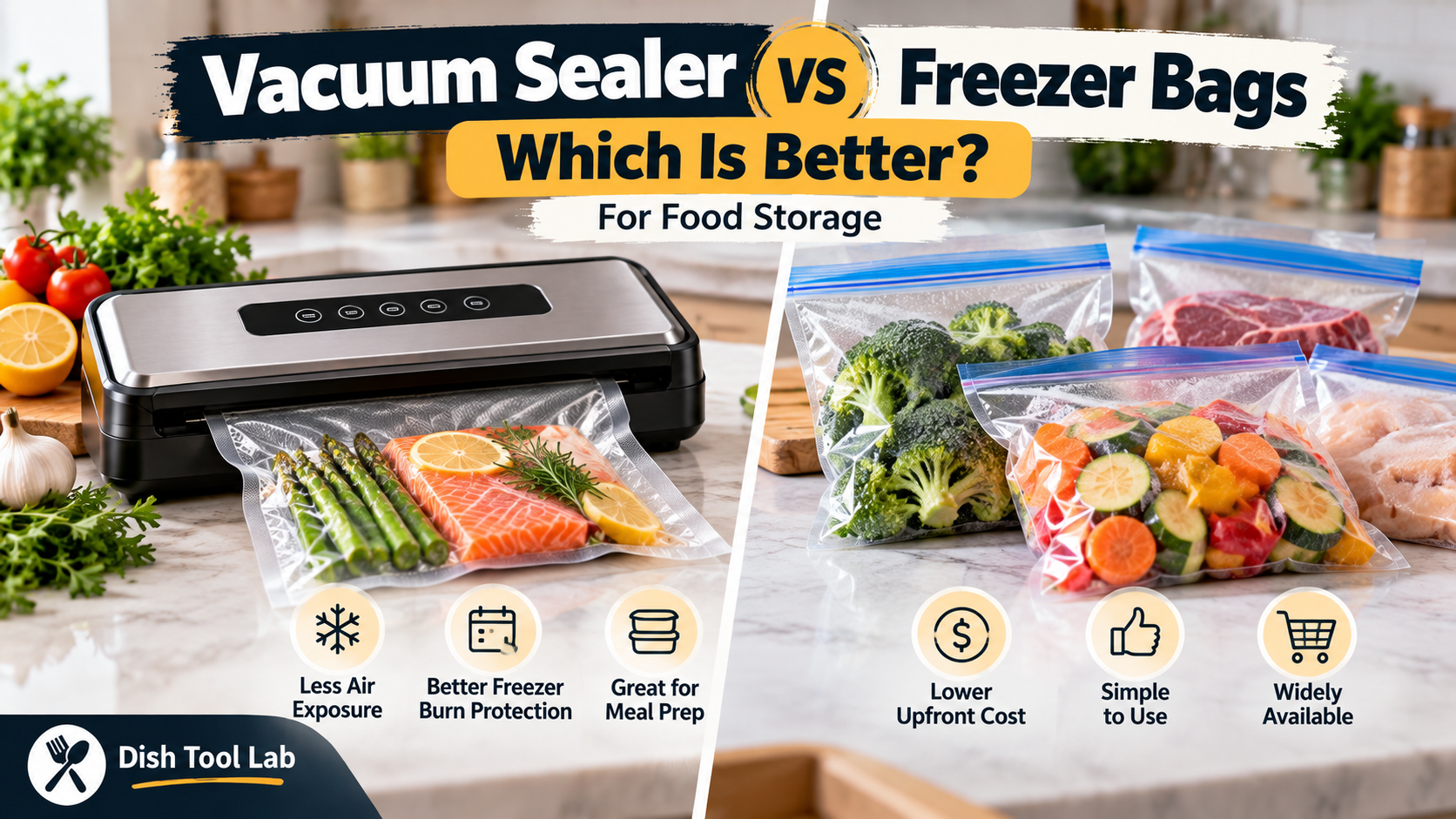
When comparing a vacuum sealer vs freezer bags, the main question is simple: do you really need a vacuum sealing machine, or are ordinary freezer bags enough to protect your food?
Both methods can help organize food and prepare portions for freezing. However, they differ in how much air they remove, their upfront cost, convenience, and the protection they provide against freezer burn.
In this guide, we compare vacuum sealing and regular freezer bags, explain their advantages and limitations, and help you choose the right option for your kitchen.
Affiliate Disclosure: This article contains affiliate links. If you purchase through one of these links, we may earn a commission at no additional cost to you. As an Amazon Associate I earn from qualifying purchases.
Vacuum Sealer vs Freezer Bags: Quick Answer
A vacuum sealer is generally the better option for frequent freezer storage and bulk food preparation because it removes more air from compatible bags and creates a heat seal.
Regular freezer bags are often the more practical choice for occasional use because they are inexpensive, widely available, and do not require a separate machine.
Neither method makes perishable food safe to store at room temperature. Proper refrigeration, freezing, handling, and cooking remain essential.
Vacuum Sealer vs Freezer Bags: Comparison Table
| Feature | Vacuum Sealer | Regular Freezer Bags |
|---|---|---|
| Air removal | Machine removes air from compatible bags | Air is pressed out manually |
| Freezer burn protection | Generally better when sealed correctly | Can be effective, but more air may remain |
| Upfront cost | Requires a machine | No machine required |
| Ongoing cost | Compatible bags or rolls | Replacement freezer bags |
| Learning curve | Requires practice with settings and seals | Simple to use |
| Bulk meal preparation | Convenient for repeated portioning | Practical for smaller quantities |
| Storage space | Machine needs storage space | Only bags need storage |
| Heat sealing | Yes, on typical external vacuum sealers | Usually zipper closure |
| Best for | Frequent freezing and batch preparation | Occasional freezing and everyday convenience |
What Is a Vacuum Sealer?
A vacuum sealer is a kitchen appliance that removes air from compatible packaging and seals the opening, usually with heat.
Most home vacuum sealers use an external suction system. You place the open end of a specially designed bag into the machine, which removes air and then seals the bag.
Reducing air exposure can help protect frozen food from dehydration and freezer burn. However, the quality of the seal, bag material, food preparation, and freezer conditions all affect the result.
If you are new to these appliances, see our step-by-step guide to using a vacuum sealer.
What Are Regular Freezer Bags?
Freezer bags are plastic storage bags designed for use in the freezer. Many have zipper-style closures and are made to help protect food from moisture loss during frozen storage.
To use them, place food inside, remove as much air as practical, close the bag securely, and freeze the contents.
They are convenient because they do not require equipment, electricity, or a heat-sealing process.
However, removing air by hand is less consistent than using a compatible vacuum-sealing machine.
1. Freezer Burn Protection
Vacuum Sealer
Vacuum sealing removes much of the air surrounding food, helping limit contact with oxygen and reducing conditions that contribute to freezer burn.
When the bag is suitable for freezing and the seal remains intact, vacuum sealing can be particularly useful for meat, poultry, and portioned freezer meals.
Regular Freezer Bags
Freezer bags can also help protect frozen food, especially when they are designed for freezing and excess air is removed before closing.
However, air pockets may remain around irregularly shaped food, increasing the chance of quality loss during extended storage.
Winner for freezer burn protection: Vacuum sealer, assuming proper packaging and freezer storage.
2. Cost: Which Option Is Cheaper?
Vacuum Sealer Costs
A vacuum sealer requires an initial equipment purchase. You will also need compatible bags or rolls, which add ongoing costs.
The machine may be worthwhile if you regularly freeze bulk purchases, prepare meals in batches, or need repeatable sealing results.
Freezer Bag Costs
Regular freezer bags require no machine, so the upfront cost is lower.
For someone who freezes food only occasionally, purchasing a vacuum sealer may not provide enough practical benefit to justify the additional expense.
Winner for lowest upfront cost: Regular freezer bags.
Remember that total cost depends on the price of the machine, bag consumption, food storage habits, and whether reduced food waste actually occurs in your household.
3. Ease of Use
Vacuum Sealer
Using a vacuum sealer involves selecting compatible bags, positioning the opening correctly, choosing a setting, and allowing the machine to complete the cycle.
Most home models are straightforward after a little practice, but moist or delicate foods may require additional care.
Regular Freezer Bags
Freezer bags are simple: fill, remove excess air, close, label, and freeze.
There are no machine settings or heating elements to manage.
Winner for simplicity: Regular freezer bags.
4. Food Storage Quality
Vacuum sealing can help preserve the quality of properly frozen foods by reducing air exposure. This may help protect flavor, texture, and appearance during freezer storage.
Regular freezer bags can also work well, particularly when the food will be used relatively soon and the bags are packed carefully.
Neither method guarantees a specific storage life. Food quality depends on temperature stability, food type, packaging, and handling.
Always follow established food-safety guidance rather than assuming vacuum-sealed food is safe indefinitely.
5. Meal Preparation and Bulk Shopping
If you regularly divide bulk purchases into meal-sized portions, a vacuum sealer can provide a repeatable way to package those portions.
It may also help keep the freezer organized with flatter, clearly labeled packages.
Regular freezer bags are still practical for small quantities, short-term storage, and quick preparation.
Winner for frequent bulk preparation: Vacuum sealer.
6. Storage Space and Convenience
A vacuum sealer needs countertop or cabinet space. Some models also store bag rolls internally, which makes the packaging process more convenient.
Regular freezer bags require very little kitchen storage space.
For a compact kitchen, freezer bags may be more convenient unless vacuum sealing is a frequent activity.
Winner for minimal equipment storage: Regular freezer bags.
7. Can You Use Regular Freezer Bags in a Vacuum Sealer?
Usually, standard smooth freezer bags are not suitable for external suction vacuum sealers.
Most external machines need compatible textured or embossed bags that provide channels for air removal.
Some specialty accessories or systems may support other bag types, but compatibility must be confirmed with the manufacturer.
Do not assume an ordinary zipper freezer bag will work in a heat-sealing vacuum machine.
8. Can You Remove Air From Freezer Bags Without a Machine?
Yes. You can press excess air out of a freezer bag before closing it.
For suitable foods, some people also use the water-displacement method:
- Place food inside a freezer-safe zipper bag.
- Close most of the zipper, leaving a small opening.
- Carefully lower the bag into a container of water while keeping the opening above the waterline.
- Allow water pressure to push air toward the opening.
- Close the zipper completely before removing the bag.
This technique does not create the same vacuum as a dedicated machine and is not appropriate for every food or bag.
Keep the bag opening and food free from contamination, and maintain safe temperatures for perishable foods.
9. Which Method Is Better for Different Foods?
| Food Type | Practical Choice | Why |
|---|---|---|
| Portioned meat for freezing | Vacuum sealer | Helps reduce air exposure when properly sealed |
| Occasional frozen leftovers | Either method | Convenience and storage duration matter |
| Bulk freezer meal portions | Vacuum sealer | Repeatable packaging for multiple portions |
| Bread and soft baked goods | Freezer bags or gentle vacuum method | Full vacuum pressure may crush soft foods |
| Soups and liquid-rich foods | Appropriate freezer-safe containers or bags | External suction sealers can draw in liquids |
| Small, occasional freezer portions | Freezer bags | No extra equipment required |
These are general packaging suggestions, not substitutes for food-specific safety instructions.
10. Food Safety: What Both Methods Have in Common
Neither vacuum sealing nor using freezer bags makes perishable food shelf-stable.
Vacuum packaging removes oxygen, which can change the conditions in which microorganisms grow. Some food-safety hazards remain possible even when a package looks properly sealed.
- Refrigerate or freeze perishable foods promptly.
- Follow safe storage times and temperatures.
- Use appropriate thawing methods.
- Take extra care with reduced-oxygen-packaged fish and seafood.
- Do not substitute vacuum packaging for validated canning or preservation methods.
- Do not rely on appearance or smell alone to determine food safety.
For official recommendations, consult FoodSafety.gov’s cold food storage charts.
When Is a Vacuum Sealer Worth Buying?
A vacuum sealer may be a worthwhile investment if you:
- Freeze meat or poultry regularly.
- Buy food in bulk and divide it into portions.
- Prepare freezer meals frequently.
- Want to reduce air exposure in compatible packaging.
- Plan to use compatible vacuum bags for sous vide cooking.
- Have enough kitchen space for the appliance.
If you freeze food only occasionally, regular freezer bags may be enough.
Recommended Vacuum Sealers for Beginners
If you decide that vacuum sealing fits your routine, here are three machines worth comparing. These recommendations are based on published product features, not independent hands-on testing.
FoodSaver V4440 — For Automatic Convenience
The FoodSaver V4440 offers automatic bag detection and a built-in handheld sealer for compatible accessories. It is worth considering if you prefer a convenient everyday sealing process.
Check FoodSaver V4440 Price on Amazon →
NESCO VS-12 Deluxe — For Adjustable Settings
The NESCO VS-12 Deluxe offers gentle and pulse vacuum options, along with multiple sealing settings. It may suit cooks who package foods with different textures.
Check NESCO VS-12 Price on Amazon →
Anova Precision Vacuum Sealer Pro — For Frequent Meal Preparation
The Anova Precision Vacuum Sealer Pro includes double sealing, built-in bag storage, and a cutter. It is worth considering for regular meal preparation and compatible sous vide applications.
Check Anova Precision Pro Price on Amazon →
For a detailed comparison of these models, read our best vacuum sealer for beginners buying guide.
Frequently Asked Questions
Is vacuum sealing better than freezer bags?
Vacuum sealing generally removes more air and can provide better protection against freezer burn when used correctly. Freezer bags remain convenient and economical for occasional storage.
Do vacuum sealers keep food fresh longer?
Vacuum sealing can help preserve food quality by reducing air exposure, especially in the freezer. It does not eliminate food-safety risks or replace proper storage temperatures.
Are vacuum sealers worth the money?
They may be worthwhile for households that frequently freeze bulk purchases or prepare meals in advance. For occasional use, regular freezer bags may be more economical.
Can I freeze meat in regular freezer bags?
Yes. Use freezer-rated bags, remove as much air as practical, close them securely, and freeze the meat promptly following safe food-handling practices.
Can vacuum-sealed food get freezer burn?
Yes. A punctured bag, weak seal, unsuitable packaging, or improper storage can still allow freezer burn to occur.
Can I use zipper freezer bags for sous vide?
Only use bags specifically approved by their manufacturer for the intended cooking temperatures and method. Not every freezer bag is suitable for heated water-bath cooking.
Is a vacuum sealer necessary for meal prep?
No. Many meals can be stored safely using appropriate containers or freezer bags. A vacuum sealer is an optional tool that may make frequent portioning and freezer organization more convenient.
Final Verdict: Vacuum Sealer vs Freezer Bags
Choose a vacuum sealer if you regularly freeze food, package bulk purchases, or want more consistent air removal from compatible bags.
Choose regular freezer bags if you value low upfront cost, minimal equipment, and simple occasional storage.
Both can be useful in the same kitchen. The right choice depends on how frequently you freeze food, the types of ingredients you store, and your budget.
If you want to explore vacuum sealing further, start with our vacuum sealer buying guide or learn how to use a vacuum sealer step by step.
1 thought on “Vacuum Sealer vs Freezer Bags: Which Is Better for Food Storage?”