
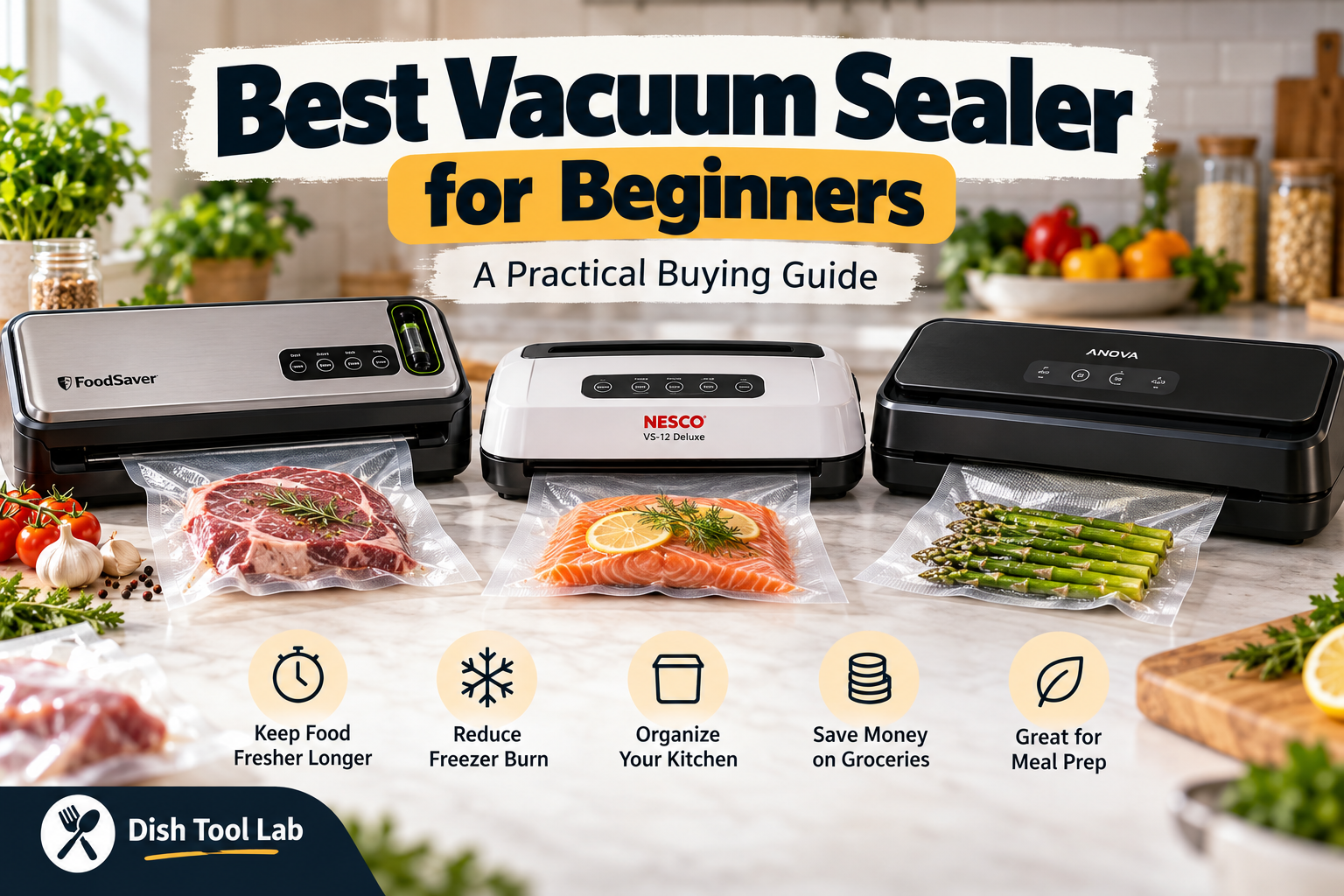
Choosing the best vacuum sealer for beginners can make food storage, freezer organization, and meal preparation more convenient. A good vacuum sealer removes air from compatible bags and creates a heat seal, helping protect properly stored food from air exposure and freezer burn.
However, vacuum sealers are not all alike. Some prioritize automatic operation, while others provide greater control over sealing pressure, delicate ingredients, and moist foods.
In this beginner-friendly buying guide, we compare three vacuum sealers: the FoodSaver V4440, NESCO VS-12 Deluxe, and Anova Precision Vacuum Sealer Pro. We explain their useful features, limitations, and which type of home cook each one may suit best.
Affiliate Disclosure: This article contains affiliate links. If you make a purchase through one of these links, we may earn a commission at no additional cost to you. As an Amazon Associate I earn from qualifying purchases.
Best Vacuum Sealer for Beginners: Quick Answer
For beginners who value straightforward operation, the FoodSaver V4440 is worth considering because it offers automatic bag detection and a built-in handheld sealing accessory.
For cooks who want more control over delicate ingredients, the NESCO VS-12 Deluxe is a strong alternative, with gentle vacuum and multiple sealing settings.
For frequent meal preparation and sous vide enthusiasts, the Anova Precision Vacuum Sealer Pro offers a useful combination of double sealing, bag storage, a cutter, and features for moist foods.
There is no universal winner. The best choice depends on your recipes, preferred controls, storage space, and budget.
Our Top 3 Vacuum Sealers for Beginners
1. FoodSaver V4440 2-in-1 Automatic Vacuum Sealer — Best for Automatic Convenience
The FoodSaver V4440 is designed to simplify the vacuum-sealing process. Its automatic bag detection helps reduce the number of manual steps required to start sealing compatible bags.
The appliance also includes a retractable handheld sealer for compatible FoodSaver zipper bags and containers, making it useful for different storage situations.
Key Features
- Automatic bag detection and vacuum sealing.
- Built-in retractable handheld sealer.
- Integrated roll storage and cutter.
- Removable drip tray for easier cleanup.
- Designed for compatible vacuum-sealing bags and accessories.
Advantages
- Convenient automated bag handling.
- Combines standard bag sealing and handheld accessory sealing.
- Useful for routine freezer organization and food storage.
Things to Consider
- The appliance takes up countertop or cabinet space.
- Compatible bags and accessories are an ongoing expense.
- Automatic operation may offer less hands-on control than some manual systems.
Best for: Beginners who want a convenient, largely automatic vacuum-sealing workflow.
Check FoodSaver V4440 Price on Amazon →
2. NESCO VS-12 Deluxe Vacuum Sealer — Best for Adjustable Controls
The NESCO VS-12 Deluxe is a practical option for beginners who want to adjust vacuum pressure and sealing settings based on the type of food being packaged.
Its controls include normal and gentle pressure options, along with settings intended for dry and moist bags. The double-seal option can provide an additional sealing line when appropriate.
Key Features
- Double vacuum pump design.
- Normal and gentle vacuum pressure settings.
- Dry, moist, and double sealing options.
- Pulse vacuum control for more careful handling.
- Built-in bag roll storage and cutter.
Advantages
- Flexible settings for different food textures.
- Gentle pressure option for delicate ingredients.
- Double-seal capability.
- Convenient integrated roll storage.
Things to Consider
- More controls may require a short learning period.
- Operating and cooling intervals must follow the manufacturer’s instructions.
- It is an external suction sealer, not a chamber vacuum sealer.
Best for: Beginners who want a balance of convenience and adjustable sealing control.
Check NESCO VS-12 Price on Amazon →
3. Anova Precision Vacuum Sealer Pro — Best for Frequent Meal Preparation
The Anova Precision Vacuum Sealer Pro is designed for cooks who frequently prepare food in advance, organize freezer portions, or use compatible vacuum-sealed bags for sous vide cooking.
It includes double sealing, integrated bag roll storage, a cutter, and an accessory port for compatible containers. Anova also emphasizes its design for handling foods with some moisture.
Key Features
- Double sealing system.
- Built-in bag storage and cutter.
- Accessory port for compatible containers.
- Controls intended to help with moist foods.
- One-handed operating design.
Advantages
- Useful for frequent batch preparation.
- Double-seal design.
- Integrated bag handling features.
- Relevant to home cooks interested in sous vide.
Things to Consider
- Its additional features may be unnecessary for occasional use.
- Moist-food capability does not mean it can safely vacuum-seal unrestricted quantities of free liquid.
- Bag and accessory compatibility should be checked before purchasing.
Best for: Home cooks who plan to vacuum-seal regularly and want versatile food-preparation features.
Check Anova Precision Vacuum Sealer Pro Price on Amazon →
Vacuum Sealer Comparison Table
| Feature | FoodSaver V4440 | NESCO VS-12 | Anova Precision Pro |
|---|---|---|---|
| Main strength | Automatic convenience | Adjustable controls | Frequent meal preparation |
| Automatic vacuum and seal | Yes | Yes | Yes |
| Gentle or controlled vacuum | Selected manual controls | Gentle and pulse options | Low-pressure control |
| Double-seal feature | Wide sealing strip | Double-seal setting | Double sealing |
| Built-in roll storage | Yes | Yes | Yes |
| Accessory sealing | Retractable handheld sealer | Canister port | Accessory port |
| Best suited to | Convenient everyday sealing | Different food textures | Regular batch preparation |
Comparison note: Features are based on published product information. Prices, availability, bundles, and specifications may change. Dish Tool Lab has not independently performed hands-on testing of these three machines.
What Is a Vacuum Sealer?
A vacuum sealer is a kitchen appliance that removes air from compatible packaging and seals the opening to help limit exposure to oxygen.
Many home models use external suction: the open end of a specially designed bag is placed in the machine, air is removed, and a heated sealing strip closes the bag.
Vacuum sealing can help reduce freezer burn and improve organization, but it does not sterilize food or eliminate the need for safe storage temperatures.
What to Look for in a Vacuum Sealer for Beginners
1. Ease of Operation
If this is your first vacuum sealer, look for clear controls and an uncomplicated process for positioning and sealing bags.
Automatic bag detection can be convenient, while manual controls may offer greater flexibility once you become familiar with the appliance.
2. Sealing Options
Some machines offer dry and moist settings or additional sealing options. These can be helpful when packaging foods with different moisture levels.
Remember that moist-food settings do not necessarily make an external vacuum sealer suitable for sealing bags filled with liquids.
3. Vacuum Pressure Control
Delicate foods may be crushed when too much air is removed. Gentle or pulse controls can help you stop the process before soft ingredients lose their shape.
4. Bag Compatibility and Ongoing Costs
Vacuum-sealing bags and rolls are recurring supplies. Before purchasing a machine, check which bag types, widths, and accessories the manufacturer supports.
External suction machines generally require compatible textured or embossed bags for reliable vacuuming.
5. Built-In Bag Cutter and Roll Storage
Integrated storage and cutting features can make it easier to create bags of different lengths without keeping a separate cutter nearby.
6. Cleaning and Maintenance
Check how easily you can clean the vacuum channel, drip tray, and sealing area. Food particles and moisture can interfere with proper operation.
7. Size and Storage
Vacuum sealers vary in width and depth. Measure your available storage space and consider whether the machine will remain on your countertop.
External Vacuum Sealer vs Chamber Vacuum Sealer
The three machines in this guide are external vacuum sealers. They remove air through the open end of a compatible bag before heat sealing it.
A chamber vacuum sealer places the entire bag inside a chamber and changes the pressure around it. Chamber machines are often better suited to liquid-rich applications, although they are typically larger and more expensive.
For most beginners packaging dry foods, portioned meats, or prepared ingredients, an external vacuum sealer is a practical place to start.
How to Use a Vacuum Sealer: Basic Steps
- Read the appliance’s instructions and choose a compatible bag.
- Place properly prepared food inside the bag.
- Leave the amount of empty space recommended by the manufacturer.
- Keep the sealing area clean, flat, and free of food particles.
- Position the bag opening correctly in the vacuum channel.
- Select the appropriate setting for the food and bag.
- Start the vacuum-and-seal cycle.
- Wait until the cycle finishes before removing the bag.
- Inspect the seal for gaps, wrinkles, or trapped debris.
- Refrigerate or freeze perishable food promptly as appropriate.
Follow your model’s instructions for cooling intervals, hot sealing surfaces, and maintenance.
What Foods Can You Vacuum Seal?
Common uses include packaging suitable portions of:
- Raw meat and poultry for refrigerated or frozen storage.
- Fish and seafood, with appropriate food-safety precautions.
- Portioned dry pantry ingredients.
- Prepared freezer meals.
- Suitable cooked foods after proper cooling.
- Some vegetables after appropriate preparation.
Not all foods are suitable for the same vacuum-sealing method. Certain fresh produce and other ingredients require special preparation or may be unsuitable for vacuum packaging.
Important Vacuum Sealing Food Safety Tips
Vacuum sealing does not make perishable food shelf-stable. Removing oxygen can slow certain quality changes, but it does not eliminate harmful microorganisms.
- Keep perishable vacuum-sealed foods refrigerated or frozen as required.
- Do not leave raw meat, seafood, or cooked perishable foods at room temperature simply because they are vacuum sealed.
- Follow established food-safety guidance for storage times and temperatures.
- Use safe thawing methods, and follow specific guidance for vacuum-packaged fish.
- Do not use a home vacuum sealer as a substitute for proper canning or food preservation methods.
- Follow validated sous vide time-and-temperature instructions when cooking vacuum-packaged food.
For authoritative food-storage information, consult FoodSafety.gov’s cold food storage charts.
Common Vacuum Sealer Mistakes to Avoid
Overfilling the Bag
Leaving too little room at the top can make it difficult to position the bag correctly and produce a reliable seal.
Using the Wrong Bags
Ordinary smooth plastic bags may not work with an external suction machine. Check the manufacturer’s compatibility requirements.
Sealing a Wet or Dirty Bag Opening
Moisture, grease, crumbs, and wrinkles in the sealing area can weaken the seal. Keep the opening clean and flat.
Crushing Delicate Foods
Use a gentle or pulse setting when supported, or choose another suitable storage method.
Ignoring Cooling Intervals
Repeated sealing without the recommended rest period can affect performance. Follow the operating limits for your model.
Assuming Vacuum Sealing Replaces Refrigeration
Vacuum-sealed perishable foods still require safe temperature control. Packaging is not a substitute for refrigeration, freezing, or proper cooking.
Which Vacuum Sealer Should You Buy?
Choose the FoodSaver V4440 If:
- You prefer automatic bag detection.
- You want a built-in handheld sealer for compatible accessories.
- You frequently package food for everyday freezer organization.
View FoodSaver V4440 on Amazon →
Choose the NESCO VS-12 Deluxe If:
- You want gentle and pulse vacuum controls.
- You package foods with different textures.
- You prefer adjustable sealing options.
Choose the Anova Precision Vacuum Sealer Pro If:
- You prepare food in batches regularly.
- You want a double-seal system.
- You are interested in compatible sous vide preparation.
View Anova Precision Pro on Amazon →
Frequently Asked Questions
What is the best vacuum sealer for beginners?
The best vacuum sealer for beginners depends on whether you value automatic operation, adjustable controls, or frequent batch preparation. The FoodSaver V4440, NESCO VS-12 Deluxe, and Anova Precision Vacuum Sealer Pro offer different approaches worth comparing.
Is a vacuum sealer worth buying?
A vacuum sealer may be worthwhile if you frequently freeze portioned food, buy ingredients in bulk, or organize meal-preparation supplies. Its value depends on how often you use it and the ongoing cost of bags.
Can a vacuum sealer prevent freezer burn?
Vacuum sealing can help reduce air exposure and the likelihood of freezer burn when bags are properly sealed and stored. It does not guarantee that frozen food will never lose quality.
Can you vacuum seal liquids?
External vacuum sealers can struggle with free liquids because suction may pull liquid toward the sealing area. Follow the manufacturer’s instructions and consider appropriate pre-freezing or equipment specifically designed for liquids.
Can you reuse vacuum sealer bags?
Reuse depends on the bag manufacturer’s instructions and food-safety considerations. Do not reuse bags that previously contained raw meat, fish, greasy foods, or other materials when doing so could create a contamination risk.
Do vacuum-sealed foods need refrigeration?
Yes, perishable foods still require refrigeration or freezing. Vacuum sealing does not make them safe to store indefinitely at room temperature.
Are expensive vacuum sealers always better?
No. A higher price may reflect additional features, but the best value depends on your cooking habits, required controls, compatibility, and how frequently you plan to use the appliance.
Final Verdict: Best Vacuum Sealer for Beginners
If your main priority is automatic convenience, start by comparing the FoodSaver V4440.
If you want more control over delicate foods and sealing settings, the NESCO VS-12 Deluxe deserves attention.
If you regularly prepare meals in batches and want double sealing and integrated bag-handling features, consider the Anova Precision Vacuum Sealer Pro.
Before buying, compare the current Amazon listings, confirm the exact model and included accessories, and consider the long-term cost of compatible bags.
For more beginner-friendly kitchen appliance guides, explore our best food processor for beginners and best immersion blender for beginners articles.
5 thoughts on “Best Vacuum Sealer for Beginners: A Practical Buying Guide”