
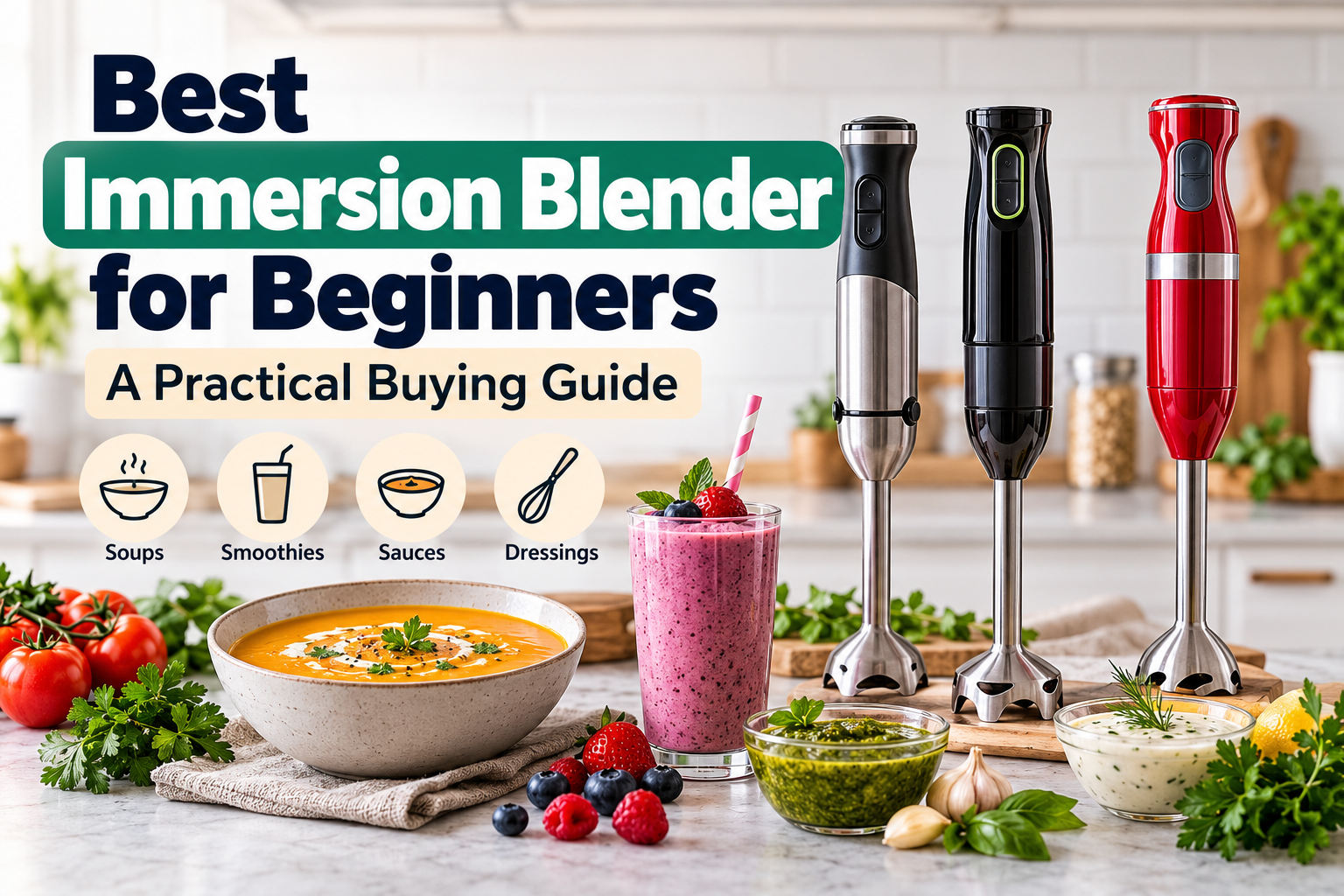
Choosing the best immersion blender for beginners can make everyday cooking easier, especially if you regularly prepare soups, sauces, smoothies, or homemade dressings. Unlike a traditional countertop blender, an immersion blender lets you blend ingredients directly in a suitable pot, bowl, or blending container.
Also called a hand blender or stick blender, this compact appliance can be especially useful in kitchens where counter space and storage are limited.
But not every immersion blender offers the same controls, attachments, comfort, or versatility. This buying guide explains what beginners should look for, compares practical options, and helps you decide which features are worth paying for.
Best Immersion Blender for Beginners: Quick Answer
For most beginners, a corded immersion blender with variable speed control, a comfortable grip, a removable blending shaft, and easy-to-clean parts is a practical starting point.
If you mainly make soups and simple sauces, a basic model may be sufficient. If you also want to whisk ingredients or chop small quantities of food, consider a model with compatible attachments.
For a more versatile setup, the Breville Control Grip and selected Braun MultiQuick models are worth comparing. For a simpler approach, KitchenAid’s variable-speed hand blender range is another option to consider.
What Is an Immersion Blender?
An immersion blender is a handheld appliance with a motorized blending shaft and blade guard. Instead of transferring ingredients into a separate blender jar, you place the blending end directly into a suitable container.
Common immersion blender uses include:
- Pureeing suitable cooked vegetables for soups.
- Preparing sauces and salad dressings.
- Blending small batches of soft ingredients.
- Making smoothies in an appropriate blending cup.
- Mixing certain dips and purees.
Some immersion blenders also support whisk or chopping attachments, although these are not included with every model.
Best Immersion Blenders for Beginners: Models Worth Comparing
Affiliate Disclosure: This article contains affiliate links. If you make a purchase through one of these links, we may earn a commission at no additional cost to you. As an Amazon Associate I earn from qualifying purchases.
The following recommendations focus on different beginner needs rather than claiming that one appliance is the best for everyone. Exact accessories and features depend on the model and package selected.
1. Breville Control Grip — For Versatile Everyday Cooking
The Breville Control Grip is an option for beginners who want more than basic blending. Its design emphasizes comfortable handling and reducing unwanted suction during blending.
The Control Grip package includes a blending jug, whisk attachment, and chopping bowl, making it relevant to cooks who prepare different recipes.
Why consider it:
- Ergonomic trigger-style grip.
- Blending base designed to reduce suction.
- Useful included accessories for varied kitchen tasks.
- Suitable for people who frequently make soups, sauces, and other blended recipes.
Considerations: A more complete accessory package can take up additional storage space and may be unnecessary if you only blend occasionally.
Best for: Beginners who cook regularly and want a versatile immersion blender setup.
View the Breville Control Grip specifications
2. Braun MultiQuick 7 — For Flexible Speed Control
The Braun MultiQuick 7 family is worth considering if you want intuitive speed adjustment and the option to expand functionality with compatible accessories.
Selected versions use pressure-sensitive speed control, allowing users to adjust blending intensity through the control button. Available accessories vary by specific package.
Why consider it:
- Speed control designed for one-handed operation.
- Multiple configurations for different cooking needs.
- Compatible accessory options on supported models.
- Useful for sauces, purees, and everyday blending.
Considerations: Braun sells several MultiQuick versions, and the included attachments are not identical. Confirm the exact model number and package contents before purchasing.
Best for: Beginners who want adjustable control and potential accessory flexibility.
Explore Braun hand blender models
3. KitchenAid Variable Speed Hand Blender — For Simple Daily Use
KitchenAid offers variable-speed hand blenders designed for common blending tasks such as soups, smoothies, and sauces.
Selected models feature a removable blending arm, variable-speed trigger, and a removable pan guard. The exact configuration depends on the model.
Why consider it:
- Straightforward handheld design.
- Variable-speed operation on compatible models.
- Removable blending arm for cleaning and storage.
- Practical for everyday soups and sauces.
Considerations: Check whether the package includes a blending jar, whisk, or other accessories. Some configurations are more basic than others.
Best for: Beginners who prioritize everyday blending over a large accessory collection.
Explore KitchenAid hand blenders
Immersion Blender Comparison Table
| Option | Main Strength | Best For | What to Check |
|---|---|---|---|
| Breville Control Grip | Comfortable handling and included accessories | Versatile everyday cooking | Storage space and package contents |
| Braun MultiQuick 7 | Flexible speed control and accessory options | Cooks wanting adjustable control | Exact model and attachment bundle |
| KitchenAid Variable Speed | Simple handheld operation | Soups, sauces, and routine blending | Included accessories and model features |
Important: This comparison is based on product design and published manufacturer information, not hands-on testing by Dish Tool Lab. Product availability, specifications, and bundles can change.
What to Look for When Buying an Immersion Blender
1. Variable Speed Control
Variable speed can help beginners start gently and increase blending intensity as needed. This is especially useful when working with mixtures that may splash.
Simple two-speed models can also be practical if you only need basic blending.
2. Comfortable Grip
Because you hold an immersion blender while using it, comfort matters. Look for a handle that feels secure and controls that are easy to operate without awkward hand positions.
3. Removable Blending Shaft
A detachable blending shaft can simplify cleaning and storage. Check how easily it connects and disconnects, and follow the manufacturer’s instructions before handling it.
4. Blade Guard Design
The blade guard surrounds the cutting blade and influences how ingredients move during blending. Some designs also aim to reduce splashing or suction against the bottom of a container.
Do not assume that every blade guard is safe for every type of cookware. Follow the manufacturer’s guidance.
5. Useful Attachments
Common accessories include:
- Blending cup: Useful for smaller batches and controlled blending.
- Whisk attachment: Helpful for compatible whisking tasks.
- Chopper attachment: Useful for certain small chopping jobs.
Only pay extra for attachments you expect to use regularly.
6. Corded vs Cordless Design
Corded immersion blenders are convenient when you usually cook near an outlet and prefer not to manage battery charging.
Cordless models offer freedom of movement, but battery runtime, charging requirements, and overall weight deserve consideration.
7. Cleaning and Maintenance
Choose a model with parts that are easy to clean. Confirm which removable components are dishwasher-safe, and never immerse the motor housing unless the manufacturer explicitly permits it.
Corded vs Cordless Immersion Blender: Which Is Better?
| Feature | Corded | Cordless |
|---|---|---|
| Power source | Wall outlet | Rechargeable battery |
| Movement | Limited by cord length | More flexible positioning |
| Charging | Not required | Required |
| Runtime | Subject to operating limits | Also limited by battery charge |
| Beginner appeal | Simple for regular countertop use | Convenient when outlets are inconvenient |
For many beginners, a corded immersion blender is a sensible starting point. A cordless model may be worth considering if portability is particularly important.
Immersion Blender vs Countertop Blender
An immersion blender is especially convenient for blending ingredients directly in a suitable container and preparing smaller quantities. A countertop blender is often better suited to large batches of smoothies and liquid-heavy recipes.
Neither appliance replaces the other for every task.
For a broader comparison of kitchen appliances, read our food processor vs blender guide.
Can an Immersion Blender Replace a Food Processor?
An immersion blender can handle some pureeing and mixing tasks, but it generally cannot replace a full-size food processor’s slicing and shredding discs.
Some immersion blender packages include a small chopper attachment, but that does not necessarily offer the same capacity or capabilities as a dedicated food processor.
If you regularly chop vegetables or shred cheese, explore our best food processor for beginners buying guide.
How to Use an Immersion Blender Safely
- Read the manufacturer’s instructions before first use.
- Choose a stable container that is suitable for the appliance.
- Attach the blending shaft securely before operation.
- Place the blade end into the ingredients before switching on, when directed by the manual.
- Start at a lower speed when possible to help limit splashing.
- Keep the blade submerged appropriately during blending and follow the manufacturer’s operating limits.
- Release the control and wait for the blade to stop before lifting the blender out.
- Unplug the appliance or disconnect its battery before removing attachments or cleaning.
Hot food safety: Do not assume that every immersion blender is suitable for hot ingredients. Follow the manufacturer’s temperature guidance, avoid splashing, and take special care around steam and hot liquids.
Common Immersion Blender Buying Mistakes
Buying Too Many Attachments
A large accessory package may look attractive, but it is not always useful. Choose the attachments that match your cooking habits.
Ignoring Grip Comfort
A blender that feels awkward to hold may be frustrating during longer blending tasks. Consider handle shape, weight, and button placement.
Assuming Higher Wattage Guarantees Better Results
Motor power is only one factor. Blade design, blending head shape, speed control, and ingredient compatibility also affect performance.
Forgetting About Cleaning
A model that is difficult to disassemble or clean may become inconvenient for everyday use. Check the care instructions before buying.
Choosing Without Considering Your Recipes
A simple immersion blender may be enough for soups and sauces. If you regularly prepare smoothies, dough, or sliced vegetables, a different appliance may be more suitable.
Frequently Asked Questions
What is the best immersion blender for beginners?
The best immersion blender for beginners is one that matches their usual recipes, feels comfortable to hold, has straightforward controls, and is easy to clean. Variable speed and a removable blending shaft are useful features to consider.
Is an immersion blender worth buying?
It can be worthwhile if you frequently prepare soups, sauces, dressings, or small blended recipes. It is especially convenient when you want to blend ingredients without transferring them to a large countertop blender.
Can you use an immersion blender in a pot?
Many immersion blenders are designed for use in suitable pots, but cookware compatibility varies. Follow the manufacturer’s instructions and use any recommended pan guard to reduce the risk of scratching.
Can an immersion blender crush ice?
Do not assume that an immersion blender can crush ice. Some models may support certain frozen ingredients, while others are not designed for this task. Check the instructions for the specific appliance.
Are immersion blenders easy to clean?
Many have removable blending shafts that make cleaning relatively straightforward. However, cleaning requirements vary, and sharp blades must be handled carefully.
Should beginners buy a corded or cordless immersion blender?
A corded model is often a practical choice for regular home cooking. A cordless model can be more convenient when freedom of movement matters, provided its battery and charging requirements suit your routine.
Final Verdict: Which Immersion Blender Should You Choose?
For beginners who mainly prepare soups and sauces, a straightforward immersion blender with comfortable controls and an easy-to-clean shaft is often enough.
If you want additional versatility, compare models with whisk and chopper attachments. The Breville Control Grip, Braun MultiQuick 7 family, and KitchenAid variable-speed range are useful starting points for researching different designs and feature sets.
Before purchasing, confirm the exact model number, included accessories, cleaning instructions, and compatibility with your favorite recipes.
For more kitchen appliance comparisons and beginner tutorials, explore our food processor vs blender comparison and food processor step-by-step guide.
1 thought on “Best Immersion Blender for Beginners: A Practical Buying Guide”