
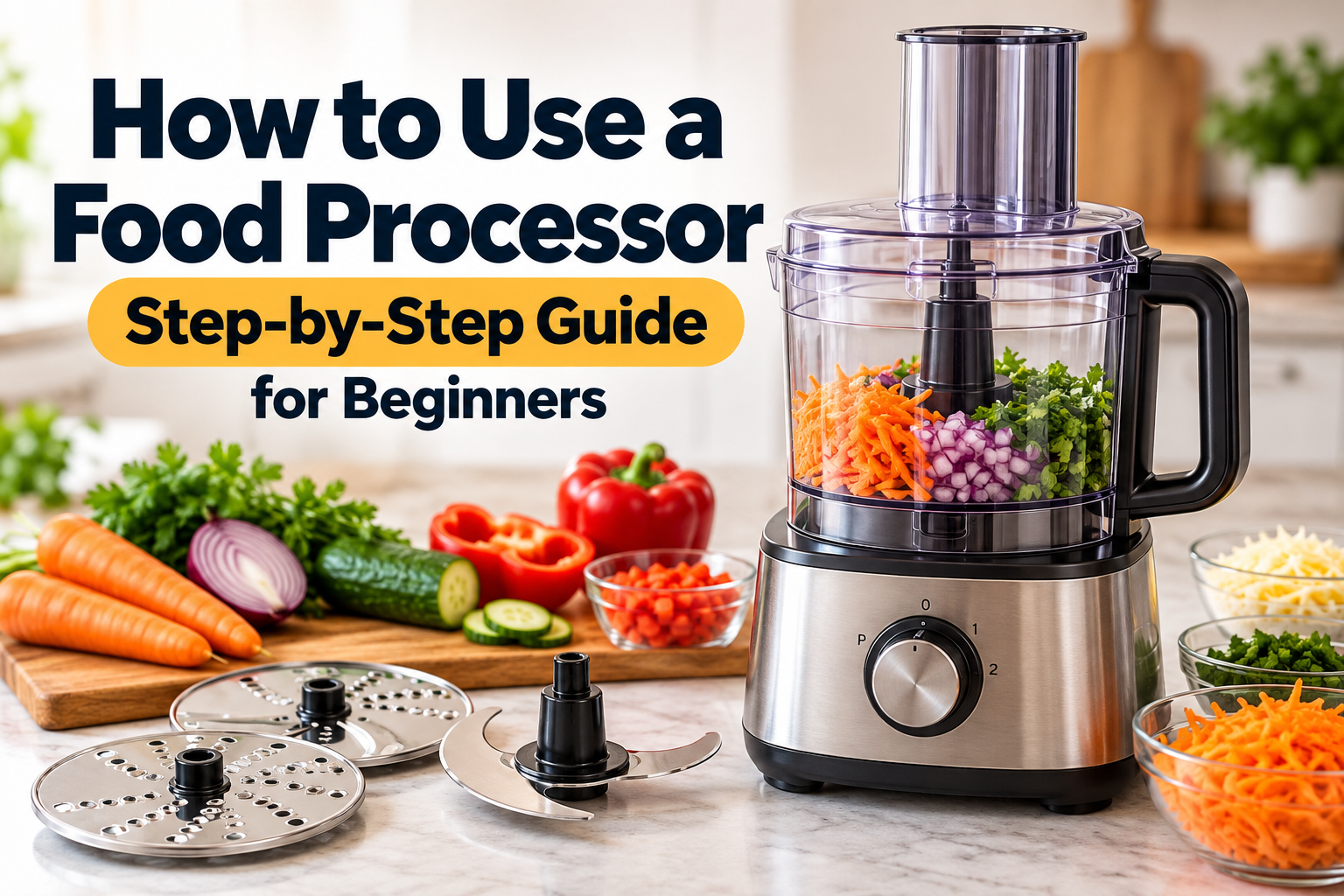
Learning how to use a food processor can make everyday cooking faster and more convenient. From chopping vegetables and shredding cheese to preparing sauces and mixing certain types of dough, this versatile kitchen appliance can handle many repetitive food preparation tasks.
However, beginners need to understand how to assemble the machine, choose the correct blade, control the texture of ingredients, and clean the parts safely.
In this step-by-step guide, you will learn how to use a food processor, which attachments to choose, what mistakes to avoid, and how to get more consistent results.
How to Use a Food Processor: Quick Answer
To use a food processor, place it on a stable surface, install the correct blade or disc, secure the bowl and lid, and add ingredients within the manufacturer’s recommended capacity. Use short pulses for controlled chopping or continuous processing when appropriate. Turn the machine off, wait for the blade to stop completely, and unplug it before removing attachments or cleaning.
Always follow the instructions for your specific food processor because assembly methods, blade designs, and processing limits vary between models.
What You Need Before Using a Food Processor
Before starting, make sure you have:
- A clean food processor with its work bowl and lid.
- The correct chopping blade or slicing/shredding disc.
- Ingredients prepared according to your recipe.
- A stable, dry countertop with enough working space.
- The manufacturer’s instruction manual.
Check that the bowl, lid, and attachments are correctly installed. Many food processors include safety interlocks that prevent operation unless the parts are secured properly.
How to Use a Food Processor: Step-by-Step Instructions
Step 1: Place the Food Processor on a Stable Surface
Position the machine on a flat, dry countertop where it will not move during operation. Keep the power cord away from water, hot surfaces, and sharp edges.
Make sure you have enough room to add ingredients and remove the bowl safely.
Step 2: Install the Correct Blade or Disc
Choose the attachment that matches your recipe. A multipurpose chopping blade is commonly used for chopping, mixing, and pureeing suitable ingredients.
Slicing discs are designed to cut ingredients into slices, while shredding discs are commonly used for foods such as cheese and certain vegetables.
Install the attachment according to the manufacturer’s instructions. Handle sharp edges carefully and avoid touching the cutting surfaces.
Step 3: Secure the Work Bowl and Lid
Attach the work bowl to the motor base and lock it into position. Add the appropriate attachment, then secure the lid as directed in your manual.
Do not attempt to bypass the safety locking mechanism. If the machine does not start, check the assembly instructions before assuming there is a mechanical problem.
Step 4: Prepare and Add the Ingredients
Wash and prepare ingredients before processing. Cut large vegetables or other foods into manageable pieces when necessary so they fit safely into the work bowl or feed tube.
Avoid exceeding the recommended maximum capacity. The safe limit for liquids, dough, or dense mixtures may be lower than the advertised bowl capacity.
For slicing and shredding, use the feed tube and supplied food pusher according to the manufacturer’s instructions.
Step 5: Start with the Pulse Function
The pulse function is useful when you want more control over the texture of chopped ingredients.
Press the pulse control briefly, then release it to inspect the results. Repeat until the ingredients reach the desired size.
Short pulses can help prevent vegetables, nuts, and other ingredients from becoming more finely processed than intended.
Step 6: Use Continuous Processing When Appropriate
Some recipes require more continuous processing, such as preparing certain sauces, purees, or mixtures.
Use the operating setting recommended for your recipe and machine. Avoid running the processor longer than necessary, particularly when working with thick mixtures or ingredients that could overheat.
Follow the manufacturer’s processing time and capacity limits.
Step 7: Check the Texture and Adjust
Stop the food processor and wait until the blade has stopped completely before opening the lid.
Inspect the ingredients to determine whether additional processing is necessary. If food is sticking to the sides, turn the machine off and unplug it before using a spatula near the blade.
Process again only if needed. Checking frequently can help you avoid overprocessing.
Step 8: Remove the Food Safely
When processing is complete, turn off and unplug the machine. Wait for all moving parts to stop before opening the lid.
Follow the manufacturer’s instructions for removing the bowl and attachment. Handle the blade carefully, keeping your fingers away from its cutting edges.
Transfer the prepared food to another container using an appropriate utensil.
Step 9: Clean and Store the Food Processor
Unplug the appliance before cleaning. Remove the bowl, lid, blade, and other accessories according to the manufacturer’s instructions.
Wash removable parts as directed in the manual. Some components may be dishwasher-safe, while others require hand washing.
Wipe the motor base with a slightly damp cloth without immersing it in water. Allow all parts to dry completely before storing the appliance.
Food Processor Blades and Attachments Explained
| Attachment | Common Uses | Beginner Tip |
|---|---|---|
| Chopping Blade | Chopping vegetables, mixing, and suitable purees | Use short pulses for better texture control |
| Slicing Disc | Slicing vegetables and other suitable foods | Use the supplied food pusher |
| Shredding Disc | Shredding cheese and suitable vegetables | Prepare ingredients to fit the feed tube |
| Dough Blade (if included) | Mixing certain dough recipes | Follow the manufacturer’s dough limits |
Not every food processor includes every attachment. Check your specific model before attempting a task that requires a specialized blade or disc.
What Can You Make with a Food Processor?
Chopped Vegetables
A food processor can quickly chop suitable vegetables for soups, sauces, salads, and other recipes. Use short pulses when you want to maintain a coarse texture.
Sliced or Shredded Ingredients
With the appropriate disc, many food processors can slice vegetables or shred ingredients such as cheese and cabbage.
Sauces and Dips
Food processors can be useful for preparing recipes such as pesto, hummus, and other thick sauces or dips. Processing times and ingredient quantities depend on the recipe and machine.
Selected Dough Recipes
Some food processors can mix or knead certain doughs. However, not all models are suitable for heavy dough preparation, and processing limits vary considerably.
Check the manufacturer’s recommendations before using your food processor for bread or other demanding dough recipes.
Tips for Better Food Processor Results
- Use the correct attachment: Match the blade or disc to the task.
- Prepare ingredients evenly: Cut large foods into manageable pieces when needed.
- Start with short pulses: This helps control chopping texture.
- Respect capacity limits: Avoid overfilling the work bowl.
- Check ingredients frequently: Stop processing once the desired texture is reached.
- Clean promptly: Removing residue soon after use can make cleaning easier.
Common Food Processor Mistakes to Avoid
Overfilling the Work Bowl
Adding too many ingredients can lead to uneven processing and may exceed the machine’s recommended capacity. Process large recipes in smaller batches when necessary.
Using the Wrong Blade
A chopping blade is not a replacement for every slicing or shredding disc. Choose the correct attachment to achieve the intended result.
Processing Ingredients for Too Long
Continuous processing can turn coarsely chopped ingredients into a much finer mixture. Use short pulses and check the texture when precise chopping is important.
Putting Hands Inside the Feed Tube
Never push ingredients toward a moving blade with your fingers or kitchen utensils. Use the food pusher supplied with the machine.
Ignoring the Manufacturer’s Instructions
Different models have different limits for liquids, dough, processing times, and attachments. Following the instruction manual helps protect both the user and the appliance.
Frequently Asked Questions
How do you use a food processor for the first time?
Start by reading the manual and cleaning the removable parts as directed. Assemble the bowl, blade, and lid correctly, add a small quantity of suitable ingredients, and practice using short pulses before attempting more complex recipes.
What is the pulse button on a food processor for?
The pulse function operates the processor in short bursts, giving you more control over chopping and mixing. It is especially useful when you want to avoid overprocessing ingredients.
Can you put hot food in a food processor?
Only process hot ingredients if the manufacturer specifically permits it and provides appropriate instructions. Heat and steam can create safety risks, so do not assume that a standard food processor is designed for hot liquids.
Can you use a food processor instead of a blender?
A food processor can handle many chopping and mixing tasks, while a blender is generally better suited to drinks and smooth liquid mixtures. Some functions overlap, but the appliances are not interchangeable for every recipe.
How often should you clean a food processor?
Clean food-contact components after each use, following the manufacturer’s instructions. Remove food residue from the bowl, lid, blades, and discs, and dry the parts before storage.
Final Thoughts
Learning how to use a food processor is easier when you focus on correct assembly, appropriate attachments, safe handling, and controlling the processing time.
Start with simple tasks such as chopping vegetables or preparing a basic sauce. As you become familiar with your machine, you can explore additional recipes that are compatible with its attachments and capacity.
Always follow the manufacturer’s instructions, particularly when handling sharp blades, processing liquids, or preparing thick mixtures.
If you are still choosing a machine, read our best food processor for beginners guide to compare bowl capacities, useful features, and practical buying considerations.
For another kitchen appliance that can simplify baking tasks, explore our how to use a stand mixer tutorial.
2 thoughts on “How to Use a Food Processor: Step-by-Step Guide for Beginners”